Design around a one-way workflow
The single most important principle is a one-directional flow that mirrors the histopathology workflow: specimen receipt & accessioning → grossing → processing → embedding → microtomy → floatation & drying → staining → microscopy & reporting. Laying the room out in this order minimises the distance specimens and slides travel, reduces mix-ups, and separates the "wet/dirty" grossing and solvent areas from the "clean" cutting, staining and reporting areas. A layout that forces staff to carry blocks back and forth across the room is the most common — and most avoidable — design mistake.
The functional zones
- Reception & accessioning — specimen logging and identification.
- Grossing room — a ventilated grossing station; this is a formalin/solvent area and needs its own extraction.
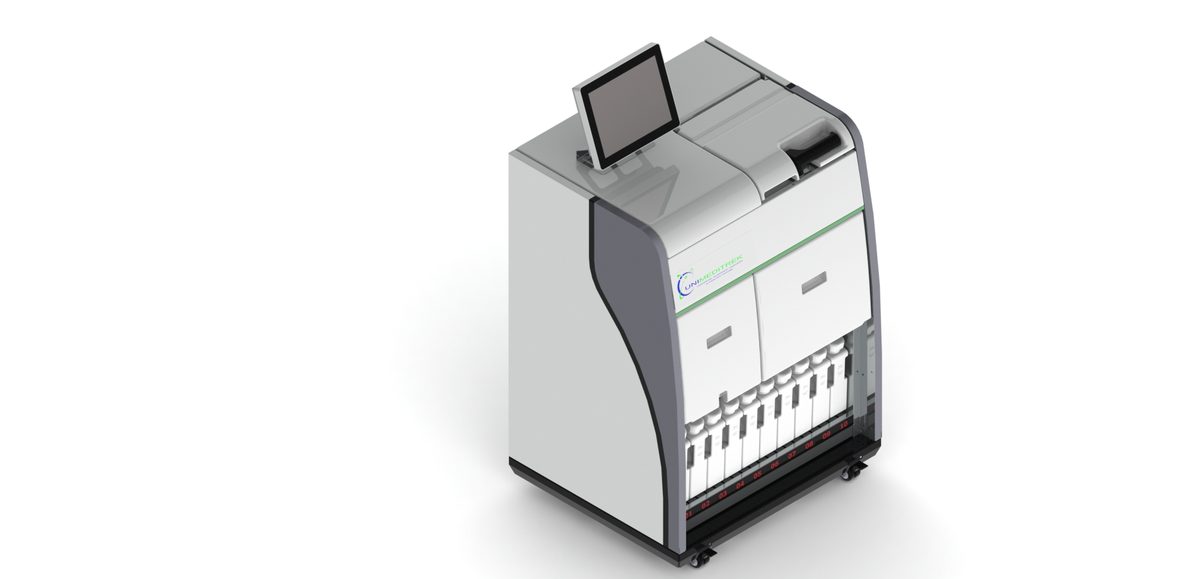
- Processing area — the tissue processor(s), ideally with local fume management.
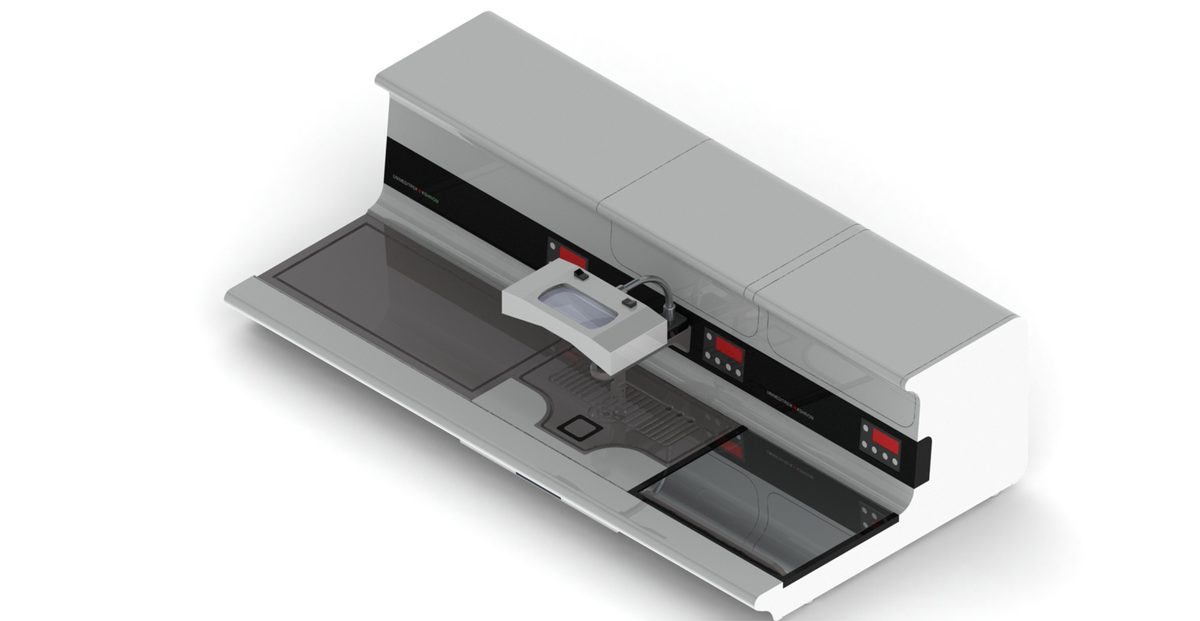
- Embedding & microtomy — embedding station, cold plate, microtomes, floatation baths and warming tables, with good bench lighting.
- Staining — the slide stainer and coverslipper with solvent extraction.
- Frozen-section room — the cryostat, sited near theatres where possible for fast turnaround.
- Reporting & microscopy — a quiet, well-lit clean area, increasingly with slide-scanning for digital pathology.
The core equipment list
A complete histopathology laboratory is built from a standard equipment set: a grossing station, a tissue processor, a tissue embedding station, a microtome, a tissue floatation bath, a slide warming table and an automatic slide staining machine — plus a cryostat wherever frozen sections are done. Each links to its own complete guide: processors, embedding, microtomes, floatation baths, warming tables, stainers and cryostats.
Sizing equipment to your case load
Capacity should follow your real workload, expressed in blocks and slides per day, not a single headline number. Estimate daily blocks, allow for peaks and growth, and size the processor schedules, microtome positions, staining throughput and bench space to match. A teaching department also needs enough microtome and embedding positions for students to work simultaneously, while a high-volume diagnostic lab prioritises walk-away automation and redundancy so one instrument down does not stop the service. The right way to size a lab is to let the manufacturer model it against your stated case load rather than copying another lab's list.
Utilities, ventilation and safety
Histopathology uses formalin and solvents such as xylene and alcohols, so ventilation is a core design requirement, not an afterthought: a properly extracted grossing station, fume management around processing and staining, and good general air changes. Plan stable power (with protection for processors mid-run), adequate water and drainage, paraffin and reagent storage, and solvent-waste handling that meets local rules. Safety provisions — eyewash, spill kit, PPE, sharps disposal at every microtome — should be designed in from the start.
Quality, accreditation and digital readiness
If the lab is to be accredited (for example to NABL), design in the documentation and controls from day one: defined procedures, equipment calibration and maintenance records, internal quality control, traceable specimen identity end to end, and a clean reporting environment. It is also worth planning for digital pathology — bench and network space for a slide scanner and the IT to store and share whole-slide images — even if it is added later. Building these in at the design stage is far cheaper than retrofitting them.
Frequently asked questions
What is the most important principle in histopathology lab design?
A one-directional workflow: specimens should move from receipt and grossing through processing, embedding, microtomy and staining to reporting without crossing back. This minimises travel and mix-ups and separates solvent/“dirty” areas from clean cutting and reporting areas.
What equipment does a histopathology lab need?
A grossing station, tissue processor, embedding station, microtome, tissue floatation bath, slide warming table and automatic slide stainer — plus a cryostat wherever frozen sections are performed, and increasingly a slide scanner for digital pathology.
How do I size equipment for my lab?
Base it on your real workload in blocks and slides per day, allow for peaks and growth, and have the manufacturer model processor schedules, microtome positions, staining throughput and bench space against your case load rather than copying another lab’s list.
What ventilation does a histopathology lab need?
Because formalin, xylene and alcohols are used, design in a properly extracted grossing station, fume management around processing and staining, and good general air changes — ventilation is a core requirement, not an afterthought.
Prepared and reviewed by the Unimeditrek technical team based on laboratory practice, installation and service experience. This document explains histopathology workflow, laboratory practice and equipment based on the questions we hear from hospitals, medical colleges and diagnostic laboratories — vendor-neutral where it explains the science and practical where it explains equipment.