Home › Products › Automatic Vacuum Tissue Processor
Automatic Tissue Processor
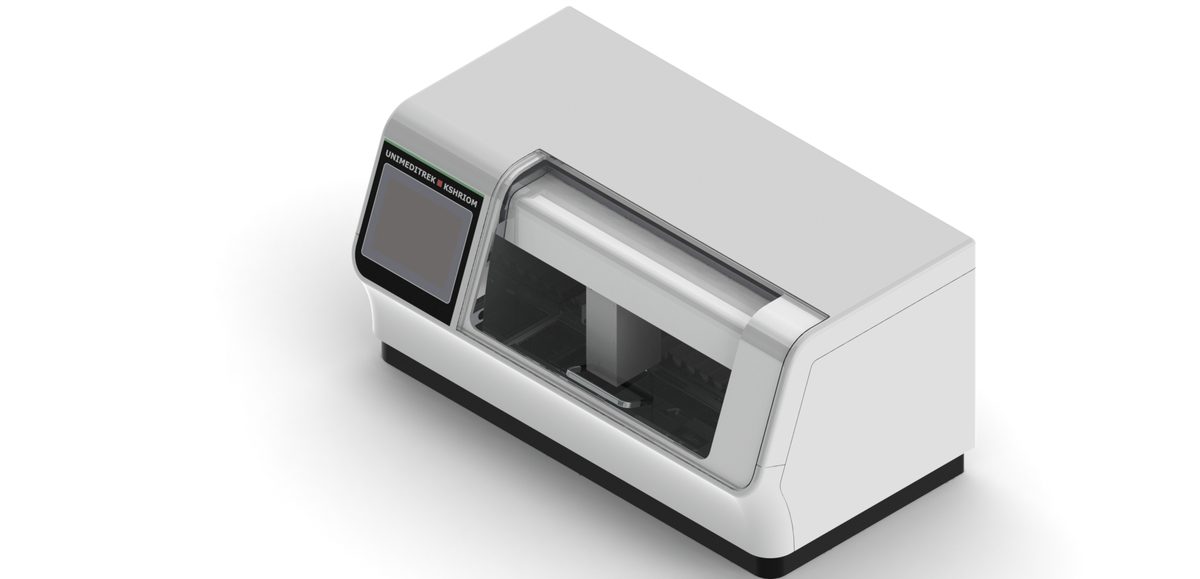
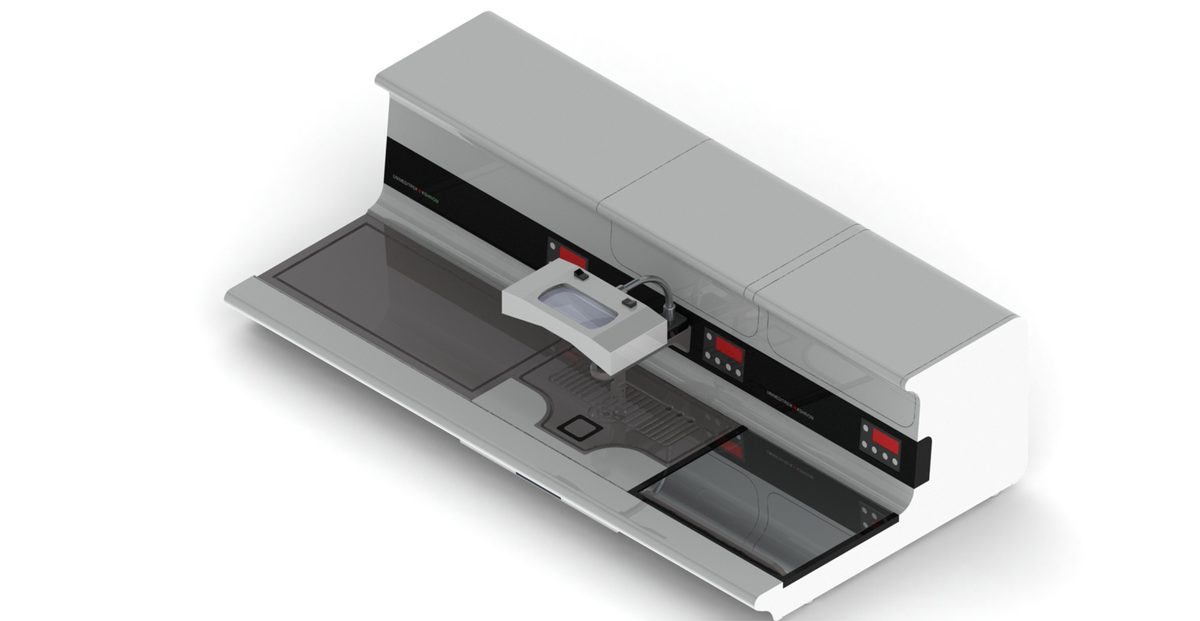
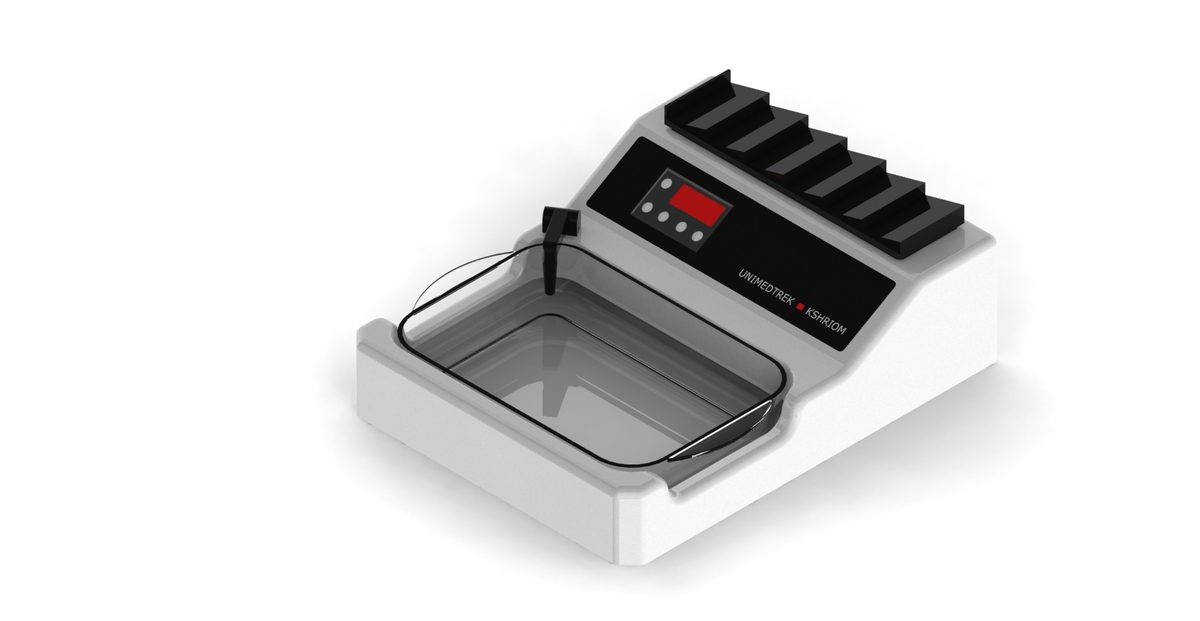
Our automatic tissue processor delivers the same reliable block, every run — reproducible dehydration, clearing and paraffin infiltration.
Engineered for the overnight run — the tissue processor India’s high-volume labs trust to have blocks ready by morning.
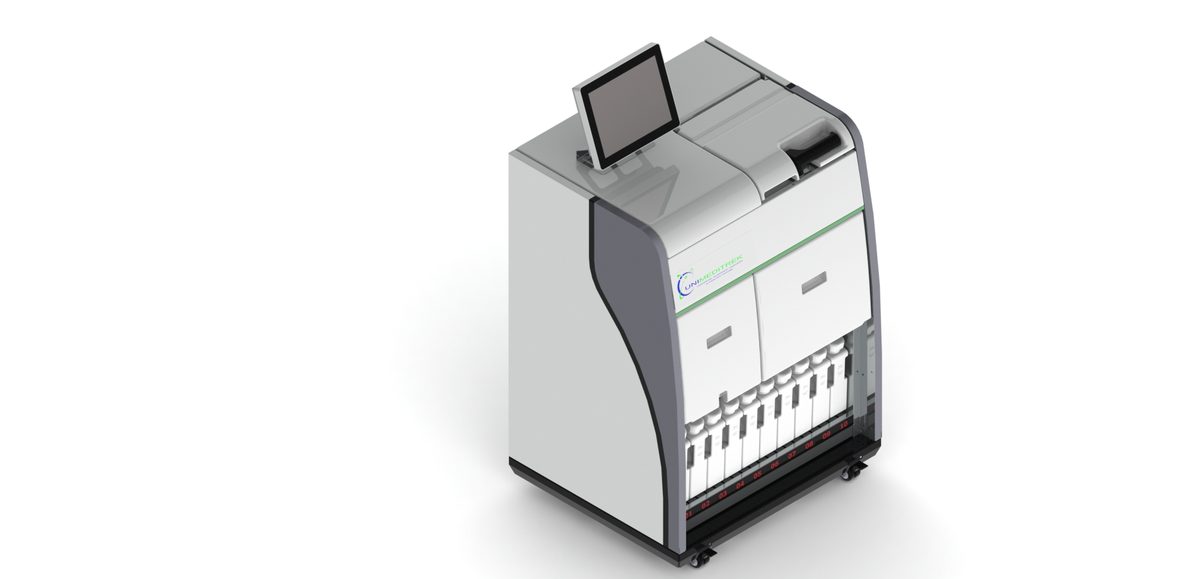
Our automatic tissue processor delivers the same reliable block, every run — reproducible dehydration, clearing and paraffin infiltration.
The VTP-300 standardises dehydration, clearing and paraffin infiltration — so embedding, sectioning, staining and the final diagnosis all begin from a reliable, reproducible block.
Talk to a histopathology specialistChoose the right automatic vacuum tissue processor configuration
The right choice depends on daily cassette load, specimen type, automation need, budget, tender specification and service expectations — tell us your workload and we’ll recommend the fit.
Automatic Vacuum Tissue Processor
For laboratories that need enclosed processing, controlled reagent movement and vacuum-assisted paraffin infiltration — for more standardised results on biopsy and surgical specimens.
Carousel Tissue Processor
A reliable, economical and easy-to-operate system that moves tissue baskets through reagent and paraffin stations on a timed arm — well suited to steady routine workloads.
What is an automatic vacuum tissue processor?
A tissue processor automates the three steps between grossing and embedding — dehydration (graded alcohols), clearing (xylene or a substitute) and paraffin infiltration. In an enclosed/vacuum processor the cassettes stay in one sealed retort and the reagents are pumped in and out under vacuum and gentle heat; a carousel processor moves baskets between open stations on a timed arm.
Automatic Vacuum Tissue Processor
Clean, sectionable blocks start here. The Kshriom-series VTP-300 delivers reproducible dehydration, clearing and paraffin infiltration on a controlled cycle — the single biggest factor in reliable morphology and a confident diagnosis. It pairs a Reagent Management System and contact-free remote fill & drain with an in-built UPS that protects your specimens for up to 45 minutes during a power failure — so a clinic-day load is never lost. Run rapid biopsies by day and conventional protocols overnight, all from a solvent-resistant colour touchscreen.
Where it fits: the Tissue Processing stage of the histopathology workflow — see it in the Virtual Lab →
Key features
- Programmable, repeatable cycles
- Reagent management system
- Vacuum & pressure infiltration
- Colour touch screen
Get a tailored offer
Supply, installation, training and AMC across India — reply within one working day.
In depth — how it works & design detail
How an automatic tissue processor works — and how to size one
An automatic tissue processor automates the three stages between grossing and embedding — dehydration through graded alcohols, clearing in xylene or a substitute, and paraffin infiltration — so every cassette is infiltrated to the same standard and sections cleanly at the microtome. The quality of the block, and therefore the confidence of the diagnosis, is set at this step.
Vacuum vs carousel
An enclosed vacuum tissue processor keeps cassettes in one sealed retort and moves reagents in and out under vacuum and gentle heat — higher, more consistent throughput and better fume containment. A carousel tissue processor moves baskets between open stations on a timed arm and is economical for steady routine loads. How to choose →
Sizing to your load
Size the retort to your busiest day, not the average. A department running routine plus biopsy and a frozen backlog needs cassette headroom so a single overnight run clears the load. The tissue processor capacity planner checks this for you.
Two things separate a dependable processor from a cheap one: a reagent-management system that rotates and monitors reagents by actual cassette throughput (not by eye), and power-failure protection — a built-in UPS that holds the cycle through a cut so an overnight run is never lost. Both, with a documented reagent-change log, are also what NABL assessors look for. See the automatic tissue processor.
Who it's for: medical-college pathology departments, government and private hospitals, and diagnostic or reference laboratories — anywhere blocks must be reproducible and an overnight run cannot be lost. Planning a new lab? Size the whole line first with the Lab Planner, then read the full histopathology lab setup guide for site, utility and tender detail.
Inside the Automatic Vacuum Tissue Processor
Explore the machine — tap any component to see what it does and why it matters.
Select any component on the left to learn what it does and why it matters to your results.
Key benefits
Complete monitoring & documentation
A printer / USB port documents every program run and setting for QC records — exportable, and compliant with current quality standards.
Vigorous paraffin cleaning cycle
Reduces solvent contamination in the paraffin, extending paraffin life, improving tissue quality and lowering running costs.
Fully covered fume system
A smart internal air-handling system condenses and collects fumes; a long-life activated-carbon filter absorbs the rest — to reduce solvent-fume exposure in the lab.
Superior reagent bottle & cabinet design
A distinctive bottle design prevents reagent carry-over, while the cabinet allows effortless, safe bottle installation and removal.
Practical, easy-to-use design
Ample working space, a one-hand safety-lock retort lid with green/red status lights, and easy access to every port and connection.
Remote fill & drain for safety
Contact-free reagent handling fills bottles to the correct level with minimal operating errors — maximum user protection and tissue quality.
Specifications
Processing retort
| Maximum capacity | 300 / 500 cassettes (metal basket) |
| Retort material | Stainless steel |
| Retort volume / temperature | 4 / 7 litres · Ambient to 75°C (user-set) |
| Paraffin temperature | Ambient, 30°C–75°C (user-set) |
| Reagent temperature | Ambient, 30°C–60°C (customisable) |
| Temperature accuracy | ±1°C |
| Vacuum & pressure | 4 modes — V/P, V, P, Ambient |
| Vacuum / pressure | -70 kPa / +35 kPa, programmable |
| Incubation / delayed end | 0–99 h 59 min · delayed up to one week |
Reagent & paraffin
| Reagent bottles | 10 × 3 / 6 litres each |
| Clean-cycle bottles | 2 / 3 |
| Paraffin baths | 4 / 5 × 3 / 6 litres, connected directly to the retort |
| Paraffin melting time | approx. 10 hours |
Control, safety & documentation
| Display | Colour, solvent-resistant touchscreen |
| Reagent Management System (RMS) | Standard, purity-ordered usage |
| Remote fill & drain | Contact-free reagent / paraffin handling |
| Power backup | In-built UPS up to 45 minutes |
| Protection | Over-temperature / over-pressure / over-vacuum |
| Programs | 20 user programs + 1 clean (expandable, unlimited) |
| Security | Two-level password; printer / USB / LIMS (optional) |
Dimensions & weight
| 3 L model (D×W×H) | 720 × 600 × 1060 mm · ~150 kg |
| 6 L model (D×W×H) | 760 × 900 × 1460 mm · ~200 kg |
| Quality | Manufactured under an ISO 9001 quality management system |
Technical specifications subject to change. Wide range of accessories on request.
Full lab guide, technician notes & tender specification
What this instrument does — and why it matters in your lab
Manual or poorly-maintained tissue processing is where most block quality is lost — under-processed centres, brittle over-hardened tissue, carry-over between reagents and ruined overnight runs after a power cut. For a lab that cannot afford to re-process a biopsy, the processor has to run the same schedule the same way every night, and protect the specimens when the power fails.
A tissue processor automates the three steps between grossing and embedding — dehydration (graded alcohols), clearing (xylene or a substitute) and paraffin infiltration. In an enclosed/vacuum processor the cassettes stay in one sealed retort and the reagents are pumped in and out under vacuum and gentle heat; a carousel processor moves baskets between open stations on a timed arm. Both aim for the same result: tissue that is fully infiltrated with wax so it sections cleanly, without the artefacts that come from rushed or uneven processing.
Suitable for hospitals, medical colleges & diagnostic labs
Suitable for medical-college pathology departments, government and private hospitals, and diagnostic and reference laboratories. In a teaching hospital the processor is usually sized for the busiest day, not the average — a medical college running routine plus CPC and frozen backlog needs headroom in cassette capacity. Purchase departments generally ask for the make/model, capacity, reagent-station count, power requirement, warranty and AMC/CMC terms; biomedical teams check the electrical load and earthing; the pathology department checks throughput and specimen-protection before technical approval.
Practical points before you buy and install
Common questions before buying
- Your real daily and peak cassette load — size the retort to the busy day with headroom, not the average.
- Enclosed/vacuum vs carousel — vacuum gives higher, more consistent throughput and better fume containment; carousel is economical for steady routine loads.
- Number of reagent stations and paraffin baths, and whether reagent rotation/monitoring is supported.
- Power-failure behaviour — insist on a built-in UPS that holds the cycle through a cut so an overnight run is not lost.
- Fume containment (charcoal/exhaust) and where the unit will vent.
- Service response time in your city and spare-parts availability before you commit.
Practical points before installation
- Confirm the electrical point (voltage/phase, dedicated socket, proper earthing) matches the machine rating.
- Plan bench/floor space with clearance for lid opening, reagent changes and service access.
- Arrange ventilation/exhaust for reagent fumes as per the site requirement.
- Keep the starter reagents (alcohols, clearing agent, paraffin) ready so processing can begin at installation.
- Decide the standard processing schedule with the pathologist before the first run.
What usually goes wrong in labs
- Soft, under-processed centres — usually an over-loaded run, exhausted reagents or too short a schedule for the tissue thickness.
- Brittle, over-hardened tissue — over-processing or paraffin held too hot for too long.
- Carry-over and cloudy sections — reagents not rotated/changed on schedule.
- A whole basket lost to a power cut — no specimen protection / UPS.
- Fume complaints at the bench — filter saturated or exhaust not planned.
Maintenance points
- Rotate/replace reagents on a fixed schedule based on cassette throughput, not "when it looks dirty".
- Clean the retort, wax lines and paraffin baths on the recommended cycle to prevent carry-over.
- Replace the charcoal/fume filter per the service schedule.
- Check the UPS/back-up battery health periodically so it actually works during a cut.
- Keep a maintenance logbook with reagent-change dates for audit/NABL.
Documents supplied with installation
- Pre-Dispatch Inspection (PDI) checklist
- Installation checklist and site-readiness note
- Operating manual and standard processing schedule
- Final QC checklist
- Warranty certificate and AMC/CMC terms
- Service report format
Operator training points
- Loading cassettes and baskets correctly
- Selecting and running the standard programme (and delayed/finish-time start)
- Reagent setup, rotation and safe handling
- Reading alarms and responding to a power event
- Cleaning routine and the maintenance log
AMC / CMC considerations
AMC/CMC covers scheduled preventive maintenance (retort/line cleaning, calibration checks, filter and UPS-battery checks), priority service response and spares planning. A processor running nightly benefits from a CMC (comprehensive) so consumable service parts are covered and downtime is predictable.
Technician & biomedical notes
Technician notes
- Check reagent levels and the paraffin bath temperature before starting a run.
- Do not overload the retort beyond the rated cassette count — it is the commonest cause of under-processing.
- Confirm the UPS is charged before an overnight run.
- Log every reagent change; a missed rotation shows up two days later as poor blocks.
- If sections are soft or brittle, review schedule and reagent age before blaming the microtome.
Biomedical / maintenance notes
- Provide a dedicated, correctly-earthed electrical point matching the rated load.
- Verify the UPS/back-up and fume-management function at installation and record it.
- Keep the PDI, installation and QC checklists on file for audit.
- Plan preventive-maintenance visits under AMC/CMC and hold the service report for each visit.
- Track spares (filters, seals, UPS battery) so they are available before failure.
Buying for a hospital or medical college?
Unimeditrek can provide the product brochure, compliance/deviation statement, technical specification sheet, budgetary quotation, warranty terms, installation & site-readiness requirements and AMC/CMC details for hospital and medical-college procurement — including government tenders.
Upload TenderRequest Compliance SheetRequest Budgetary QuoteRequest Technical Specification
Supplied with every installation
Product close-up images
Available on request
Product testing video
Available on request
PDI checklist sample
Available on request
Installation checklist
Available on request
Final QC checklist
Available on request
Service report format
Available on request
Warranty / AMC format
Warranty certificate and AMC/CMC terms supplied at installation.
Tender compliance format
Compliance/deviation statement prepared per tender specification.
This page has been prepared and reviewed by the Unimeditrek technical team based on histopathology equipment workflow, installation requirements, service experience and common buyer questions from hospitals, medical colleges and diagnostic laboratories.
Recommended consumables for this equipment
Keep your Automatic Vacuum Tissue Processor running with matched, lab-grade consumables — order on demand or subscribe for automatic monthly supply. Online checkout & payment launching soon.
 Tissue processing
Tissue Cassettes
Biopsy & standard cassettes for processing and embedding.

 Reagents
Processing Reagents (alcohols & clearing)
Dehydration and clearing reagents for tissue processing.
 Cleaning & maintenance
Tissue Processor Service Kit
Seals, o-rings & wear parts for annual service.
Kits & packs for this machine
Starter Kit
10 items · Tissue Cassettes, Paraffin Wax, Processing Reagents (alcohols & clearing), Formalin Containers…
EnquireMonthly Consumables Pack
4 items · Tissue Cassettes, Paraffin Wax, Processing Reagents (alcohols & clearing), Cleaning Solution
EnquireAnnual Consumables Pack
4 items · Tissue Cassettes, Paraffin Wax, Processing Reagents (alcohols & clearing), Cleaning Solution
EnquireDownloads & documents
Why it matters to your role — pathologist, technician, procurement & biomedical
Why it matters to you
Used at the Tissue Processing stage of the histopathology workflow. Built to serve every stakeholder in the lab.
- Consistent, reproducible results that protect diagnostic quality
- Clean output that reduces repeats and rework
- Designed around the real histopathology workflow
Manual vs automatic — what changes
Conventional equipment vs the Automatic Vacuum Tissue Processor
How the Automatic Vacuum Tissue Processor compares with typical conventional equipment on the points that affect quality, safety and uptime.
| Feature | Conventional equipment | Unimeditrek |
|---|---|---|
| Vacuum & pressure infiltration | Often absent | Yes — for dense & fatty tissue |
| Programmable protocols | Limited / fixed | Multiple stored, repeatable schedules |
| Reagent management | Manual, by habit | Tracked usage & timely rotation |
| Alarms & safety interlocks | Basic | Comprehensive |
| Automation | Partial | Full, hands-off cycles |
| Documentation & service | Variable | IQ/OQ/PQ + AMC/CMC, made in India |
Comparison is against typical conventional equipment in this category and is provided for general guidance.
How it compares across the range
How it compares across the range
A quick side-by-side of Automatic Vacuum Tissue Processor and related equipment. Open any product for full specifications.
| Feature | Automatic Vacuum Tissue ProcessorThis product | Automatic Slide Staining Machine | Tissue Embedding Station | Cryostat Microtome |
|---|---|---|---|---|
| Workflow stage | Tissue Processing | Histopathology | Histopathology | Histopathology |
| Category | Histopathology | Histopathology | Histopathology | Histopathology |
| Made in India | ✓ | ✓ | ✓ | ✓ |
| Installation & training | Included | Included | Included | Included |
| Warranty | Standard | Standard | Standard | Standard |
| AMC / CMC | Available | Available | Available | Available |
| Genuine spares | ✓ | ✓ | ✓ | ✓ |
| Details | You are here | View → | View → | View → |
Buyer's guide — how to compare & what to check before you buy
How to compare the Automatic Vacuum Tissue Processor before you buy
Specifications alone don't tell the whole story. Use this checklist to evaluate any histopathology instrument objectively — and ask every vendor, including us, the same questions.
On the machine
- Cassette capacity vs your daily / overnight load
- Vacuum + pressure infiltration, not gravity alone
- Reagent management and fume containment
- Power-failure protection (UPS / resume-after-power-cut)
- Number of programmable protocols and scheduling
- Reagent economy and per-run running cost
On the vendor & support
- Manufacturer track record and Make-in-India status
- Nationwide installation, training and service coverage
- Genuine spare-parts availability and stocking in India
- Warranty terms and AMC/CMC options
- Compliance sheets and tender documentation (ISO 13485, CE, CDSCO)
- Reference installations you can actually call
Institutions across India that chose Unimeditrek
The Automatic Vacuum Tissue Processor comes from the same manufacturer trusted by government hospitals, medical colleges and research institutes nationwide. A representative selection of institutions we have supplied and continue to support:
A representative selection from 500+ installations across India. See installations & proof → · Request customer references →
Installation & site requirements
A detailed pre-installation / site-readiness document — power, space, environment and connectivity — is provided with your quotation. Our engineer confirms readiness before installation.
Power supply
Stable supply; stabiliser/UPS where recommended.
Space & bench
Bench or floor space with clearance for service access.
Environment
Controlled temperature/humidity and ventilation as specified.
Utilities
Water/drainage or exhaust where the instrument requires it.
Installation, training & AMC/CMC detail
Professional installation and commissioning, operator training, preventive maintenance, calibration support, genuine spare parts and warranty management — backed across India. Service & AMC/CMC →
Commercial & tender readiness
We sell on quotation, not a fixed list price — so you get a configuration that matches your workload and budget, with the documentation government and institutional buyers need. Here is exactly what a purchase includes and how we support procurement.
What's included
Supply, professional installation & commissioning, operator training, standard warranty and handover documentation — quoted transparently, no hidden add-ons.
Total cost of ownership
Energy- and reagent-efficient operation, affordable AMC/CMC, genuine spares stocked in India and high uptime — lower lifetime cost than a low-quote import.
Tender & procurement pack
Editable technical specification, Make-in-India declaration, ISO 13485 & compliance sheets, warranty/AMC formats and a ready BOQ line — for GeM and institutional tenders.
Flexible commercials
Configuration-specific quotation usually within one working day, AMC/CMC options, and institutional / multi-unit pricing on request.
Request a commercial proposal Request the tender pack Tender support →
Book a demonstration
Don't buy on a brochure alone. See the Automatic Vacuum Tissue Processor working and ask your technical questions directly to our specialists.
Live online demo
A scheduled screen-share / video walkthrough with a product specialist — anywhere in India, no travel needed.
On-site demonstration
Where feasible we arrange a demonstration at your lab or a nearby reference site so your team can see it in person.
WhatsApp walkthrough
Prefer something quick? Ask on WhatsApp and we'll send a short walkthrough and answer your questions.
Guides, use cases & white papers
Complete Guide to Histopathology
A complete guide to histopathology — what it is, the laboratory workflow from grossing to reporting, the equipment involved, staining, quality and digital pathology.
Read the guide →Complete guideComplete Guide to Tissue Processors
A complete guide to tissue processors — the science of fixation, dehydration, clearing and paraffin infiltration, vacuum technology, throughput, troubleshooting and how to select one.
Read the guide → Use casesAutomatic Vacuum Tissue Processor — four scenarios
How it is used across diagnostic labs, medical colleges, oncology centres and government institutions.
Read document → White paperReducing Turnaround Time in Histopathology
Where reporting time is actually lost across the histopathology workflow — and a practical, stepwise method to win it back without compromising quality.
Read document →White paperPlanning and Setting Up a New Histopathology Laboratory
A workflow-first framework for equipping a histopathology laboratory — from case-load planning and layout to utilities, equipment selection, commissioning and support.
Read document →Is the Automatic Vacuum Tissue Processor right for your lab?
Before you buy, ask these questions
- How many cassettes do you process each day?
- Do you need rapid biopsy by day and overnight runs?
- Do you need vacuum and pressure infiltration?
- How many reagent stations do you require?
- Is a reagent-management system included?
- What protects your specimens during a power failure?
- Does the supplier provide installation, training, AMC and spares?
Get a configuration recommendation Upload tender for compliance support
Reviews — Automatic Vacuum Tissue Processor
★★★★★ 4.8 out of 5 · based on 6 verified customer reviews
“The automated tissue processor is easy to operate and provides reliable performance. It saves time, reduces manual work, and gives consistent tissue processing results. Overall, a good and efficient laboratory machine.”
“This machine works fine”
“The Automatic Vacuum Tissue Processor from Unimeditrek has truly streamlined our daily workflow. Its efficiency in tissue processing has significantly reduced turnaround times, allowing us to focus on delivering accurate results to our clinicians faster. A game changer for our lab!”
“The product performed well.”
“The Automatic Slide Staining Machine from Unimeditrek has significantly enhanced our workflow and accuracy. Its efficiency in delivering consistent results saves us both time and effort, making it an indispensable tool in our histopathology lab. Highly recommended!”
“The Automatic Vacuum Tissue Processor from Unimeditrek has significantly streamlined our daily workflow. Its efficiency and reliability have improved our sample processing times, allowing us to focus more on critical diagnostics. I couldn't be happier with this addition to our lab!”
Common questions
How many samples can be processed per run?
The VTP-300 processes up to 300 or 500 cassettes per run depending on the metal-basket configuration. Share your daily and peak cassette load and we recommend the right capacity with headroom for busy days.
Is vacuum required?
Vacuum/pressure infiltration speeds and standardises processing and improves fume containment in an enclosed processor. A carousel processor works without vacuum for routine loads. We help you choose from your workflow.
What happens during a power failure?
The VTP-300 has a built-in UPS with a power bank of up to 45 minutes, so the cycle is held and an overnight run is protected against a power cut.
How many reagent stations are available?
The VTP-300 has 10 reagent bottles (3 or 6 litres each) plus 2–3 clean-cycle bottles, and 4–5 paraffin baths (3–6 litres each) connected directly to the retort. Its Reagent Management System rotates reagents in order of purity for consistent quality.
How often should reagents be changed?
On a fixed schedule based on cassette throughput, not appearance. We set a rotation schedule at installation and record it in the maintenance log — this is also what NABL auditors look for.
What power supply is required?
The VTP-300 includes a built-in UPS (power bank up to 45 minutes) that protects a run through a power cut. Provide a dedicated, properly-earthed electrical point; the exact rating is confirmed on the technical datasheet.
What documents are supplied after installation?
PDI checklist, installation checklist, operating manual and standard schedule, final QC checklist, warranty certificate, AMC/CMC terms and the service report format.
Is operator training included?
Yes — installation includes operator training on loading, running programmes, reagent handling, alarms and the cleaning/maintenance routine.
Is AMC/CMC available?
Yes — both AMC and comprehensive CMC are available with scheduled preventive maintenance, priority response and spares planning.
Can this be supplied for a government tender?
Yes. We provide Product brochure, technical specification sheet, compliance/deviation statement, budgetary quotation, warranty terms, installation & site-readiness requirements and AMC/CMC details.
What information is needed for a quotation?
Your daily/peak cassette load, preferred type (vacuum or carousel), site power availability and whether AMC/CMC is required. We then send a configuration-specific quotation, usually within one working day.
What is the difference between a vacuum tissue processor and a carousel tissue processor?
A vacuum (enclosed) tissue processor holds the cassettes in one sealed retort and moves reagents under vacuum and gentle heat — higher, more consistent throughput and better fume containment. A carousel tissue processor moves baskets between open reagent stations on a timed arm and is more economical for steady routine loads. We help you choose from your daily volume and fume-management needs.
How long does a tissue processing cycle take?
It depends on the protocol and tissue thickness. Most labs run a rapid biopsy schedule of a few hours by day and a longer conventional schedule overnight. We set your standard schedules with the pathologist at installation so processing is repeatable, not improvised.
What is the difference between manual and automatic tissue processing?
Manual processing depends on the technician moving tissue between reagents by hand and judgement, which drifts between shifts. An automatic tissue processor runs the same programmed schedule every time, with reagent rotation and power-failure protection — so blocks are consistent and an overnight run is protected.
Which automatic tissue processor is right for my lab?
It depends on your daily and peak cassette load and your fume-management setup. A medical college or busy reference lab usually needs an enclosed/vacuum automatic tissue processor with reagent management and cassette headroom so a single overnight run clears the load; a smaller routine lab can run a carousel processor economically. Share your volume and we recommend the right configuration.
Do you make a carousel tissue processor and a fully automatic tissue processor?
Yes. We manufacture both rotary (carousel) and fully automatic vacuum tissue processors. The carousel model is an economical choice for routine labs, while the fully automatic vacuum processor adds programmable reagent management and vacuum/pressure infiltration for higher, more consistent throughput.
What is the difference between an automatic tissue processor and a carousel tissue processor?
A carousel tissue processor moves baskets between reagent stations on a rotary arm; a fully automatic (enclosed/vacuum) tissue processor keeps tissue in one retort and pumps reagents in and out under vacuum and heat. Both automate dehydration, clearing and paraffin infiltration — we help you pick the right one for your workload.
What is the price of the Automatic Vacuum Tissue Processor in India?
The price depends on capacity/configuration, accessories, installation location, warranty, AMC/CMC requirement, tender documentation and GST/freight. Share your requirement — such as cassette load or daily throughput — and we’ll send a configuration-specific quotation, usually within one working day.
Is the Automatic Vacuum Tissue Processor made in India?
Yes — Unimeditrek Pvt. Ltd. manufactures it in India, with nationwide installation, training and service support.
Do you provide installation, training and AMC/CMC?
Yes — professional installation and commissioning, operator training, preventive maintenance and AMC/CMC contracts are available across India.
Can you provide technical specifications and compliance documents?
Yes — technical specifications, compliance sheets, warranty/AMC formats and Make-in-India declarations are available on request from our team.
Is the Automatic Vacuum Tissue Processor available for export?
Yes — we supply international distributors. Contact us for export documentation and distributor terms.
Author: Unimeditrek Technical Content Team · Reviewed by: Unimeditrek Biomedical Engineering & Histopathology Applications team · Last reviewed: July 2026.
Educational and procurement guidance for histopathology laboratories. Configurations and specifications are confirmed against your requirement at the time of quotation; regulatory certificates and registration documents are issued on request per product and destination.
Ready to move forward?
Request a Quote Talk to a specialist Add to Lab Plan Become a Dealer
Related: Tissue Processor Tender Specification → How to Choose a Tissue Processor → Carousel Tissue Processor → Tissue Processor Consumables → Tissue Processor AMC & Maintenance → Indian-Made vs Imported Histopathology Equipment →