Reducing Turnaround Time in Histopathology
Where reporting time is actually lost across the histopathology workflow — and a practical, stepwise method to win it back without compromising quality.
Abstract
Turnaround time (TAT) — the interval from specimen receipt to authorised report — is the metric clinicians experience most directly, and the one most often used to judge a histopathology service. It is also uniquely hard to compress, because the work is sequential and partly governed by chemistry and physics that cannot simply be rushed. This paper maps where time is genuinely lost across grossing, fixation, processing, embedding, microtomy, staining, reporting and the hand-offs between them, and sets out a measured, stepwise approach to shorten TAT by removing avoidable delay and variability rather than by cutting corners.
Background: why histopathology TAT is hard to compress
A histopathology report cannot be produced faster than its slowest necessary step. Tissue must be adequately fixed, fully processed, embedded, sectioned, stained and then interpreted — and several of these steps are rate-limited by diffusion and reaction times that degrade quality if shortened. The result is that TAT is rarely held up by one dramatic bottleneck; it is the sum of many small, avoidable delays and of rework caused by variability. Improving TAT therefore means engineering out avoidable waiting and avoidable repeats, while protecting the steps that genuinely need time.
Where the time is actually lost
Across most laboratories, delay accumulates at predictable points:
- Fixation: tissue that enters processing under-fixed processes poorly, forcing re-processing — a delay created hours earlier.
- Grossing & accessioning: batching and manual logging create queues before processing even begins.
- Processing: long fixed overnight schedules, and the risk that one failed or mis-set run delays an entire batch.
- Embedding & microtomy: poor orientation and incomplete infiltration cause recuts; blunt blades and unstable floatation add re-do time.
- Staining: manual variability produces re-stains and, worse, re-reads.
- Hand-offs: trays waiting between benches, and slides waiting to be matched to paperwork.
- Downtime: a single instrument failure with no service cover can stall the whole line.
Clinical and operational impact
Delays are not abstract. In oncology and surgical pathology, each additional day postpones treatment decisions and adds anxiety for patients. For the laboratory, unpredictable TAT means status-chasing calls from clinicians, an inability to plan staffing, and difficulty meeting accreditation TAT targets. Conversely, a predictable TAT — even if not the shortest possible — lets the department communicate realistic timelines, build clinician trust and plan its workload.
A stepwise method to reduce TAT
Improvement should be measured and targeted, not based on intuition:
- 1. Measure first. Define TAT precisely, then segment it by step (receipt→grossing→processing→report). You cannot fix a bottleneck you have not located.
- 2. Standardise fixation. Set and enforce minimum fixation protocols; do not let under-fixed tissue enter processing.
- 3. Optimise processing schedules. Match the schedule to specimen type — short, gentle cycles for small biopsies; full cycles for large or fatty tissue. Use reagent management so a run never fails mid-way for degraded reagent.
- 4. Cut recuts. Good embedding orientation, complete infiltration, sharp blades and a stable floatation/drying step prevent the re-do work that quietly consumes hours.
- 5. Standardise staining. Automate routine staining so slides are read-ready the first time and re-stains fall away.
- 6. Streamline flow and tracking. Remove waiting between steps and track blocks and slides so nothing is mislaid or duplicated.
- 7. Protect uptime. Preventive maintenance under a service contract keeps any single instrument from stalling the line.
Key parameters and trade-offs
Small biopsies and large resections should never share one processing schedule; separating them is often the single biggest TAT win. Rapid processing routes (including microwave-assisted methods where appropriate) can shorten small-biopsy TAT dramatically — but they must be validated, not improvised. Crucially, fixation time should not be cut to save minutes, because the resulting repeats cost far more time than they save. Most gains come from removing rework and waiting, not from speeding up the chemistry.
Quality control and the metrics to track
Treat TAT as a managed metric. Track median and 90th-percentile receipt-to-report TAT, segmented by specimen type; the 90th percentile exposes the cases patients actually wait on. Alongside it, monitor recut rate, re-stain rate, batch-failure rate and instrument uptime — these leading indicators usually explain TAT movements before the headline number changes.
Common pitfalls
- Chasing one visible bottleneck while a larger one elsewhere dominates — always measure first.
- Shortening fixation or processing and generating more repeats than were saved.
- Buying capacity to fix what is really a flow or downtime problem.
- Improving the laboratory steps but leaving manual, paper-based hand-offs untouched.
How Unimeditrek helps
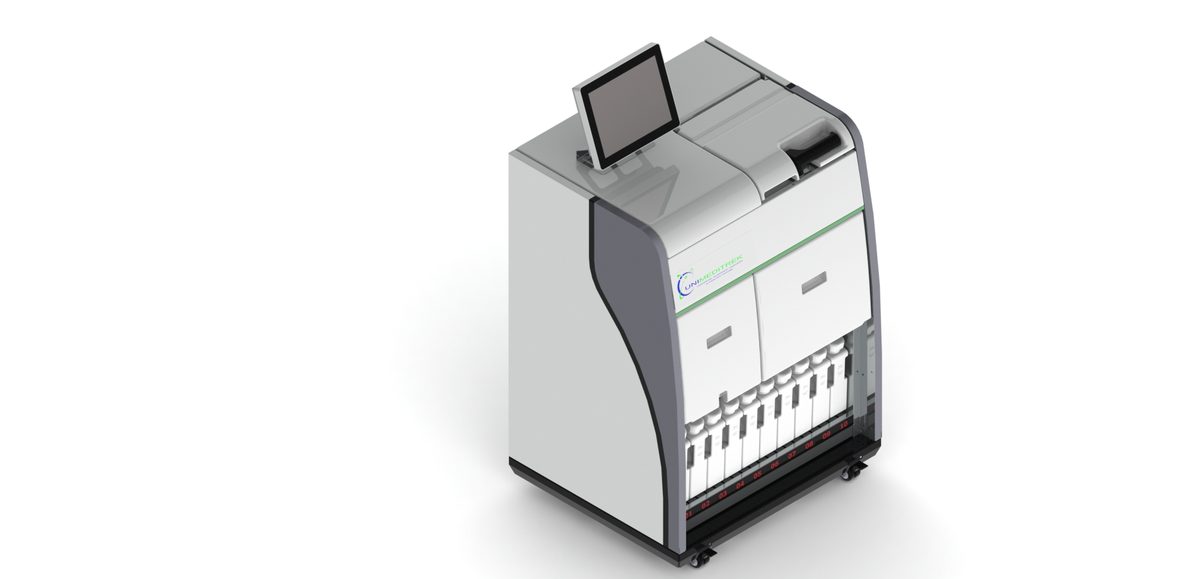
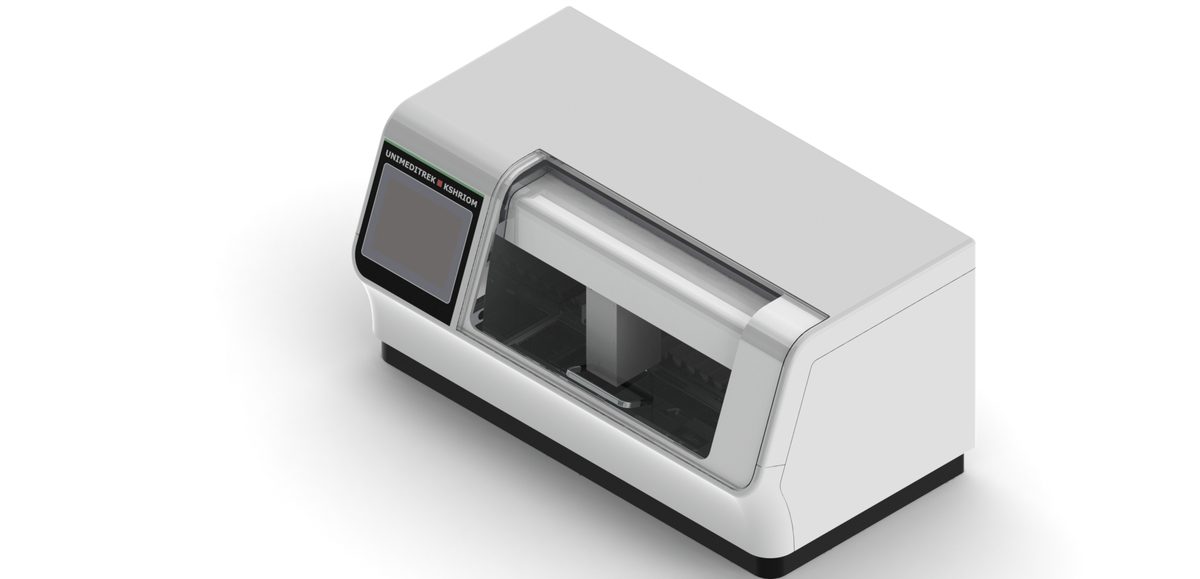
Our tissue processors offer programmable routine and rapid schedules with reagent management; our microtomes and automatic slide stainers are built to cut recuts and re-stains; and our AMC/CMC protects uptime so no step stalls the line. We can review your workflow end-to-end and recommend where the largest, lowest-risk TAT gains lie. The Build Your Lab planner helps size equipment to your case load, and Service & AMC/CMC keeps it running.
Frequently asked questions
What is turnaround time (TAT) in histopathology?
TAT is the interval from specimen receipt to the authorised report. It is usually tracked as median and 90th-percentile, segmented by specimen type, because a small number of complex cases can dominate the experience clinicians actually have.
Where is reporting time most often lost?
Rarely in one dramatic bottleneck — it accumulates in under-fixation, batching before processing, long or failed processing runs, recuts from poor embedding, re-stains, hand-offs between benches and instrument downtime.
Can processing be sped up safely?
Yes, but only by validated means — matching the schedule to specimen type, using rapid routes for small biopsies, and reagent management so a run never fails mid-way. Cutting fixation to save minutes usually creates repeats that cost far more time.
Should small biopsies and large resections share one processing schedule?
No. Separating them — short, gentle cycles for small biopsies and full cycles for large or fatty tissue — is often the single biggest TAT improvement a lab can make.
How do recuts and re-stains affect TAT?
They are hidden time sinks. Good embedding orientation, complete infiltration, sharp blades, stable floatation and standardised staining remove the re-do work that quietly consumes hours each day.
Does automation reduce TAT?
Indirectly and reliably — automatic staining and well-maintained processors and microtomes cut the variability that causes repeats, so slides are read-ready the first time.
How do we measure TAT properly?
Define it precisely, then segment by step (receipt→grossing→processing→report) and by specimen type. Track median and 90th-percentile TAT alongside recut rate, re-stain rate, batch-failure rate and uptime — these usually move before the headline number does.
Can Unimeditrek help us reduce TAT?
Yes — we can review your workflow end to end and recommend where the largest, lowest-risk gains lie, and our equipment plus AMC/CMC protect the steps that most often cause delay.
Prepared and reviewed by the Unimeditrek technical team based on laboratory practice, installation and service experience. This document explains histopathology workflow, laboratory practice and equipment based on the questions we hear from hospitals, medical colleges and diagnostic laboratories — vendor-neutral where it explains the science and practical where it explains equipment.
Discuss this for your laboratory
Our specialists can map this to your case load and recommend the right configuration, documentation and service plan.