Home › Products › Automatic Slide Staining Machine
Automatic Slide Staining Machine
Reproducible staining isn't decoration. It's diagnostic confidence.
Batch-after-batch H&E consistency your pathologists can sign a report on.
Reproducible staining isn't decoration. It's diagnostic confidence.
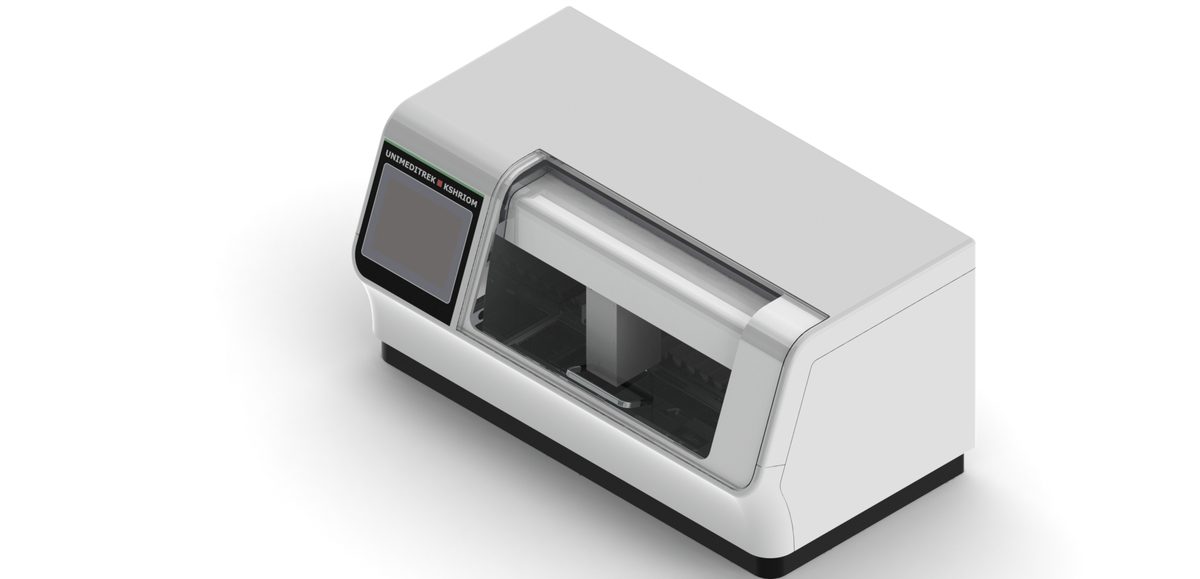
The LSM-520 turns staining from a personal habit into a controlled, repeatable protocol — consistent contrast, fewer repeats and faster reporting, even at 500 slides an hour.
Talk to a histopathology specialistChoose the right automatic slide staining machine configuration
The right choice depends on daily cassette load, specimen type, automation need, budget, tender specification and service expectations — tell us your workload and we’ll recommend the fit.
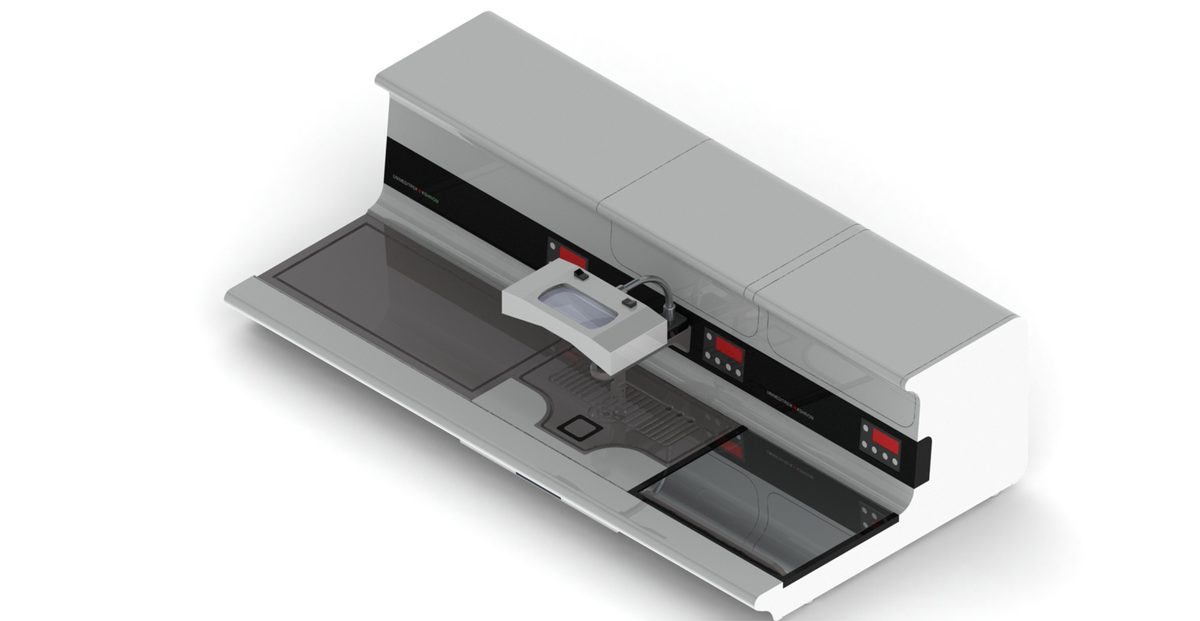
Linear Slide Staining Machine
For laboratories that need continuous workflow, higher throughput and steady daily slide movement through the H&E sequence.
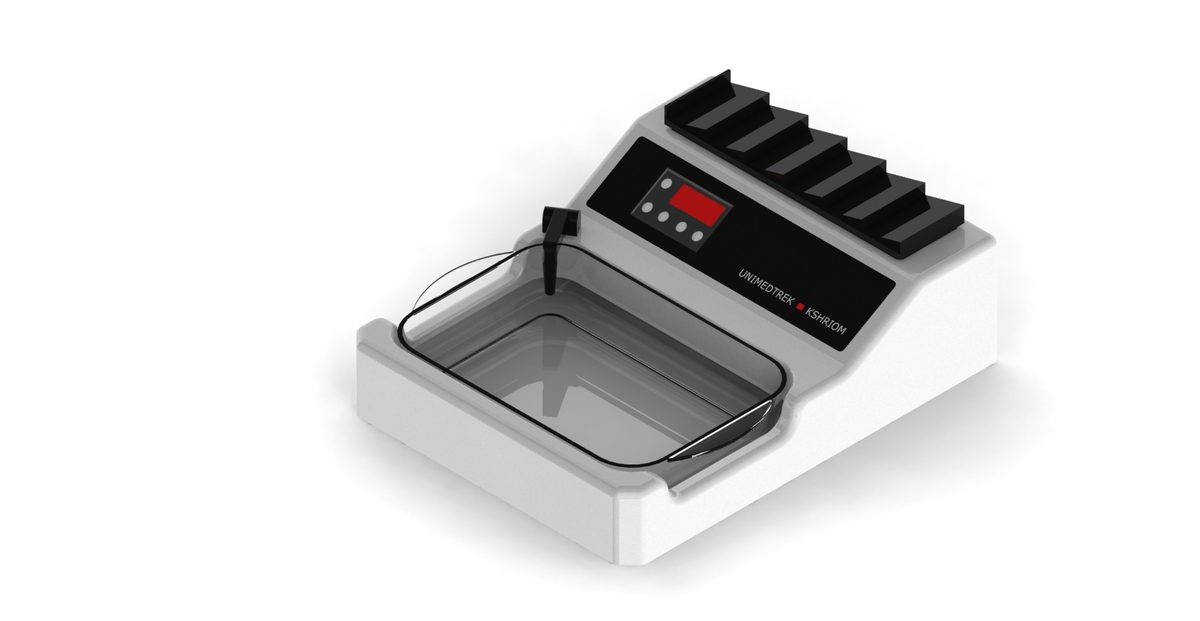
Batch Slide Staining Machine
For laboratories that process slides in controlled batches and want a practical automatic alternative to manual staining.
What is an automatic slide staining machine?
An automatic slide stainer moves racks of slides through a programmed sequence of reagents with controlled dip times, so haematoxylin and eosin (and special stains) come out the same on every run. It removes the shift-to-shift variability of hand staining, frees the technician, and — with fume management — reduces bench exposure to staining chemicals.
Automatic Slide Staining Machine
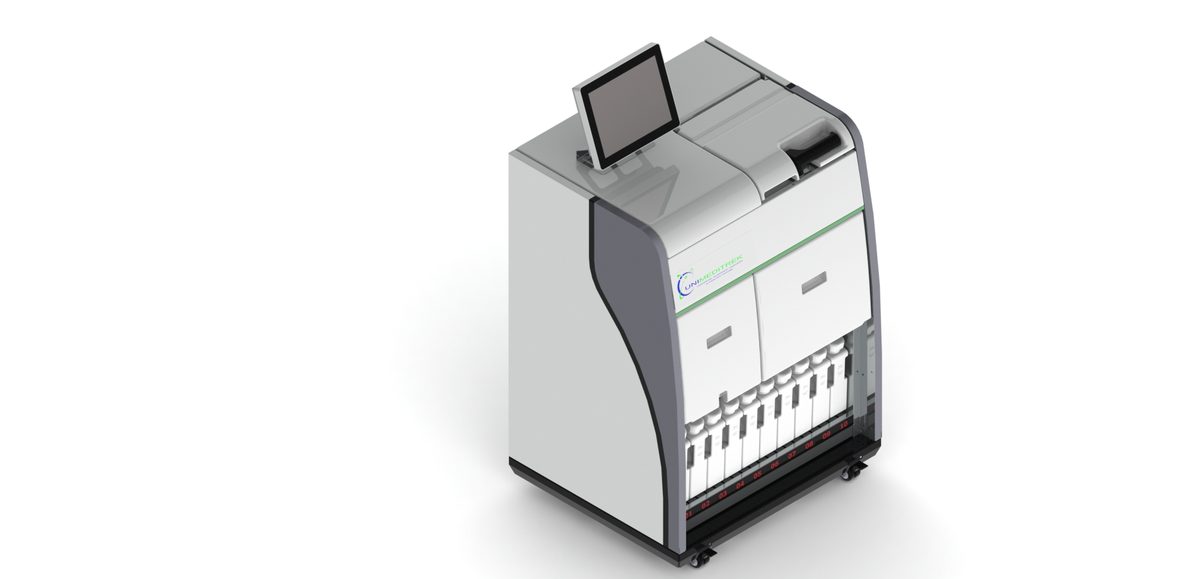
Every diagnosis begins with a slide the pathologist can trust. The Kshriom-series LSM-520 is a true production-line stainer — up to 500 slides an hour across as many as 12 parallel staining programs, processing 12 baskets of 30 slides at once to alike or unlike protocols. It controls dip time, sequence and reagent freshness so your H&E and special stains look the same on Monday morning as they do on Friday evening, with an incorporated charcoal filter protecting your team's air. Your staff walk away while it works — and walk back to slides that are crisp, evenly contrasted and ready to read.
Key features
- Programmable stain protocols
- Consistent contrast
- Reagent management
- Walk-away operation
Get a tailored offer
Supply, installation, training and AMC across India — reply within one working day.
Inside the Automatic Slide Staining Machine
Explore the machine — tap any component to see what it does and why it matters.
Select any component on the left to learn what it does and why it matters to your results.
Key benefits
Reproducibility you can stake a report on
Programmed protocols lock in dip time and sequence, so nuclear and cytoplasmic contrast look the same across every batch, every technician and every shift.
Fewer repeats, faster turnaround
Standardised runs mean fewer pale or over-stained slides going back for a re-do — protecting your TAT and your reagent budget.
Walk-away productivity
Load it, start it and step away. Your technologists spend their time on bench work that matters, not babysitting a staining rack.
Reagent management that saves money
Track reagent life and rotation to avoid carry-over and exhaustion — cleaner stains at a lower cost per slide.
Built for the busy Indian lab
Rugged, serviceable and supported pan-India, so a high-volume lab keeps moving.
Specifications
Capacity & throughput
| Throughput | Up to 500 slides per hour |
| Baskets | Up to 12 baskets × 30 slides |
| Parallel staining programs | Up to 12, run simultaneously |
| Staining protocols / steps | 20 protocols · up to 40 steps |
| Step time | 1 second to 59 minutes per step |
Stations (44 total)
| Loading / unloading | 4 loading · 4 unloading (incl. 1 transfer) |
| Water | 6 running-water + 4 water stations |
| Drying | 2 stations, adjustable +40°C to +90°C |
| Staining | 30 stations with agitation |
| Drip collection | Adjustable 0–9 s, avoids solvent carry-over |
General
| Reagent containers | 360 ml, reducible to 260 ml |
| Fume handling | Incorporated charcoal filter + external ventilation |
| Compatibility | All cover-slipping machines in the market |
| Dimensions (W×D×H) | 1210 × 670 × 640 mm · 115 kg |
| Power supply | 100–230 V / 50–60 Hz / 100 VA |
Technical specifications subject to change. Wide range of accessories on request.
Full lab guide, technician notes & tender specification
What this instrument does — and why it matters in your lab
As slide volume grows, manual H&E stops being reproducible — dip times drift between shifts, reagents exhaust unevenly, and re-stains eat into reporting time. A busy lab needs the same contrast on every slide, walk-away operation and controlled reagent handling, without the technician standing at the rack.
An automatic slide stainer moves racks of slides through a programmed sequence of reagents with controlled dip times, so haematoxylin and eosin (and special stains) come out the same on every run. It removes the shift-to-shift variability of hand staining, frees the technician, and — with fume management — reduces bench exposure to staining chemicals.
Suitable for hospitals, medical colleges & diagnostic labs
Used across medical colleges, hospitals and diagnostic chains that run routine H&E plus special stains. High-throughput teaching and reference labs often prefer a linear/continuous stainer for steady flow; smaller labs run a batch stainer. Purchase teams ask for throughput, station count, special-stain capability, power and AMC/CMC; the pathology department checks staining consistency; biomedical checks the electrical and fume requirements.
Practical points before you buy and install
Common questions before buying
- Your daily and peak slide volume, and expected growth — this decides batch vs linear.
- Whether you run only H&E or also special stains (programmable protocols matter).
- Number of reagent and wash stations, and how reagent carry-over is controlled.
- Slide drying/adhesion after staining, and fume management at the bench.
- Consumable and reagent supply plan, and AMC/CMC for predictable running cost.
Practical points before installation
- Confirm the electrical point and, where needed, water inlet/drain for wash stations.
- Plan fume extraction for staining reagents.
- Keep starter reagents ready and the H&E protocol agreed with the pathologist.
- Allow bench space with service access to reagent stations.
What usually goes wrong in labs
- Inconsistent contrast between runs — drifting dip times on a poorly-maintained or manual set-up; the stainer fixes this if reagents are managed.
- Increasing re-stains — reagents exhausted and not changed on schedule.
- Sections washing off slides — poor section adhesion/drying upstream, not the stainer itself.
- Fume complaints — exhaust not planned or filter saturated.
Maintenance points
- Change/rotate staining reagents on a fixed schedule by slide throughput.
- Clean stations, racks and dispensing lines on the recommended cycle.
- Maintain wash-water flow and drainage where fitted.
- Replace fume filters per schedule and keep a maintenance log for audit.
Documents supplied with installation
- PDI checklist
- Installation checklist and site-readiness note
- Operating manual with the standard H&E protocol
- Final QC checklist
- Warranty certificate and AMC/CMC terms
- Service report format
Operator training points
- Loading racks and selecting the correct programme
- Reagent setup, rotation and safe handling
- Reading alarms and clearing common faults
- Cleaning routine and the maintenance log
AMC / CMC considerations
AMC/CMC covers preventive maintenance of stations and dispensing, calibration/timing checks, fume-filter service and priority response. For a high-volume lab a CMC keeps consumable service parts covered.
Technician & biomedical notes
Technician notes
- Verify reagent levels and freshness before the first batch of the day.
- Track slide count against the reagent-change schedule — most re-stains trace back to a missed change.
- Ensure sections are properly dried/adhered upstream so they do not float off during staining.
- Keep the fume path clear and report saturated filters.
Biomedical / maintenance notes
- Provide the rated electrical point and, if required, water inlet/drain.
- Verify fume extraction and drying station at installation.
- Hold PDI/installation/QC checklists and each AMC service report for audit.
- Plan reagent and filter spares so they are on hand.
Buying for a hospital or medical college?
Unimeditrek can provide the product brochure, compliance/deviation statement, technical specification sheet, budgetary quotation, warranty terms, installation & site-readiness requirements and AMC/CMC details for hospital and medical-college procurement — including government tenders.
Upload TenderRequest Compliance SheetRequest Budgetary QuoteRequest Technical Specification
Supplied with every installation
Product close-up images
Available on request
Product testing video
Available on request
PDI checklist sample
Available on request
Installation checklist
Available on request
Final QC checklist
Available on request
Service report format
Available on request
Warranty / AMC format
Warranty certificate and AMC/CMC terms supplied at installation.
Tender compliance format
Compliance/deviation statement prepared per tender specification.
This page has been prepared and reviewed by the Unimeditrek technical team based on histopathology equipment workflow, installation requirements, service experience and common buyer questions from hospitals, medical colleges and diagnostic laboratories.
Recommended consumables for this equipment
Keep your Automatic Slide Staining Machine running with matched, lab-grade consumables — order on demand or subscribe for automatic monthly supply. Online checkout & payment launching soon.


Kits & packs for this machine
Downloads & documents
Why it matters to your role — pathologist, technician, procurement & biomedical
Why it matters to you
Built to serve every stakeholder in the lab.
- Consistent, reproducible results that protect diagnostic quality
- Clean output that reduces repeats and rework
- Designed around the real histopathology workflow
Manual vs automatic — what changes
Conventional equipment vs the Automatic Slide Staining Machine
How the Automatic Slide Staining Machine compares with typical conventional equipment on the points that affect quality, safety and uptime.
| Feature | Conventional equipment | Unimeditrek |
|---|---|---|
| Staining consistency | Operator-dependent | Identical timing every run |
| Operation | Manual dipping | Programmable, walk-away |
| Protocol storage | Limited | Multiple stored protocols |
| Throughput | Low | Batch throughput |
| Service & AMC | Variable | AMC/CMC + genuine spares |
Comparison is against typical conventional equipment in this category and is provided for general guidance.
How it compares across the range
How it compares across the range
A quick side-by-side of Automatic Slide Staining Machine and related equipment. Open any product for full specifications.
| Feature | Automatic Slide Staining MachineThis product | Automatic Vacuum Tissue Processor | Tissue Embedding Station | Cryostat Microtome |
|---|---|---|---|---|
| Workflow stage | Histopathology | Tissue Processing | Histopathology | Histopathology |
| Category | Histopathology | Histopathology | Histopathology | Histopathology |
| Made in India | ✓ | ✓ | ✓ | ✓ |
| Installation & training | Included | Included | Included | Included |
| Warranty | Standard | Standard | Standard | Standard |
| AMC / CMC | Available | Available | Available | Available |
| Genuine spares | ✓ | ✓ | ✓ | ✓ |
| Details | You are here | View → | View → | View → |
Buyer's guide — how to compare & what to check before you buy
How to compare the Automatic Slide Staining Machine before you buy
Specifications alone don't tell the whole story. Use this checklist to evaluate any histopathology instrument objectively — and ask every vendor, including us, the same questions.
On the machine
- Slide throughput vs your daily staining volume
- Programmable protocols beyond routine H&E
- Reagent management and carry-over control
- Batch-to-batch consistency and reproducibility
- Ease of reagent changeover and daily maintenance
On the vendor & support
- Manufacturer track record and Make-in-India status
- Nationwide installation, training and service coverage
- Genuine spare-parts availability and stocking in India
- Warranty terms and AMC/CMC options
- Compliance sheets and tender documentation (ISO 13485, CE, CDSCO)
- Reference installations you can actually call
Institutions across India that chose Unimeditrek
The Automatic Slide Staining Machine comes from the same manufacturer trusted by government hospitals, medical colleges and research institutes nationwide. A representative selection of institutions we have supplied and continue to support:
A representative selection from 500+ installations across India. See installations & proof → · Request customer references →
Installation & site requirements
A detailed pre-installation / site-readiness document — power, space, environment and connectivity — is provided with your quotation. Our engineer confirms readiness before installation.
Power supply
Stable supply; stabiliser/UPS where recommended.
Space & bench
Bench or floor space with clearance for service access.
Environment
Controlled temperature/humidity and ventilation as specified.
Utilities
Water/drainage or exhaust where the instrument requires it.
Installation, training & AMC/CMC detail
Professional installation and commissioning, operator training, preventive maintenance, calibration support, genuine spare parts and warranty management — backed across India. Service & AMC/CMC →
Commercial & tender readiness
We sell on quotation, not a fixed list price — so you get a configuration that matches your workload and budget, with the documentation government and institutional buyers need. Here is exactly what a purchase includes and how we support procurement.
What's included
Supply, professional installation & commissioning, operator training, standard warranty and handover documentation — quoted transparently, no hidden add-ons.
Total cost of ownership
Energy- and reagent-efficient operation, affordable AMC/CMC, genuine spares stocked in India and high uptime — lower lifetime cost than a low-quote import.
Tender & procurement pack
Editable technical specification, Make-in-India declaration, ISO 13485 & compliance sheets, warranty/AMC formats and a ready BOQ line — for GeM and institutional tenders.
Flexible commercials
Configuration-specific quotation usually within one working day, AMC/CMC options, and institutional / multi-unit pricing on request.
Request a commercial proposal Request the tender pack Tender support →
Book a demonstration
Don't buy on a brochure alone. See the Automatic Slide Staining Machine working and ask your technical questions directly to our specialists.
Live online demo
A scheduled screen-share / video walkthrough with a product specialist — anywhere in India, no travel needed.
On-site demonstration
Where feasible we arrange a demonstration at your lab or a nearby reference site so your team can see it in person.
WhatsApp walkthrough
Prefer something quick? Ask on WhatsApp and we'll send a short walkthrough and answer your questions.
Guides, use cases & white papers
Complete Guide to Histopathology
A complete guide to histopathology — what it is, the laboratory workflow from grossing to reporting, the equipment involved, staining, quality and digital pathology.
Read the guide →Complete guideComplete Guide to Slide Staining Machines
A complete guide to automatic slide staining machines — how H&E and special staining works, manual versus automatic, machine types, the features that matter, troubleshooting and how to choose one.
Read the guide → Use casesAutomatic Slide Staining Machine — four scenarios
How it is used across diagnostic labs, medical colleges, oncology centres and government institutions.
Read document → White paperReducing Turnaround Time in Histopathology
Where reporting time is actually lost across the histopathology workflow — and a practical, stepwise method to win it back without compromising quality.
Read document →White paperStandardising H&E and Routine Staining Quality
Why staining drifts, what it costs, and how automation plus reagent discipline deliver slides that look the same on every shift, operator and batch.
Read document →Is the Automatic Slide Staining Machine right for your lab?
Before you buy, ask these questions
- What is your peak slides-per-hour load?
- Do you run H&E plus special stains?
- How many parallel protocols do you need?
- Is reagent management included to control cost?
- Is it compatible with your cover-slipper?
- How is fume extraction handled?
- What training and AMC are included?
Get a configuration recommendation Upload tender for compliance support
Reviews — Automatic Slide Staining Machine
★★★★★ 5.0 out of 5 · based on 2 verified customer reviews
“This machine works fine”
“The Automatic Slide Staining Machine from Unimeditrek has significantly improved our workflow. Its precision and speed in staining have elevated our diagnostic accuracy, allowing us to handle more samples efficiently. Highly recommend it for any pathology lab striving for excellence.”
Common questions
How many slides can be stained per batch?
The LSM-520 is a linear (continuous-feed) stainer that processes up to 12 baskets of 30 slides — 360 slides — in parallel, at a throughput of up to 500 slides per hour.
Is it suitable for H&E?
Yes — routine H&E is the primary use, with controlled dip times for reproducible nuclear and cytoplasmic contrast on every slide.
Can it be used for special stains?
Yes — the LSM-520 stores up to 20 staining protocols with up to 40 steps and can run up to 12 programmes in parallel, covering deparaffination, hydrating, H&E, special stains and counterstaining.
How many reagent stations are available?
The LSM-520 has 44 stations in total — 30 staining stations with agitation, 6 running-water and 4 water stations, 2 drying stations (adjustable +40°C to +90°C) and 4 loading + 4 unloading stations.
What is the difference between manual and automatic staining?
Manual staining is operator-dependent and hard to keep consistent as volume grows; an automatic stainer standardises dip time, sequence and reagent freshness for reproducible results and frees the technician.
How is staining consistency maintained?
Through programmed timing and a fixed reagent-rotation schedule set at installation. We record the schedule in the maintenance log.
What training is required for technicians?
Installation includes training on loading racks, selecting programmes, reagent handling, alarms and the cleaning routine.
What power supply is required?
The LSM-520 runs on 100–230 V, 50/60 Hz, 100 VA. Provide a dedicated, earthed point; a water inlet/drain is used for the running-water wash stations.
Is AMC/CMC available?
Yes — AMC and comprehensive CMC with scheduled preventive maintenance and priority response.
Can this be supplied for a government tender?
Yes. We provide Product brochure, technical specification sheet, compliance/deviation statement, budgetary quotation, warranty terms, installation & site-readiness requirements and AMC/CMC details.
Is this a linear slide staining machine or a batch slide staining machine?
We offer automatic slide staining machines in linear (continuous-feed) and batch configurations. A linear slide staining machine suits high-throughput labs needing steady flow, while batch staining suits smaller runs — both give reproducible H&E and special stains with programmable timing.
Does the automatic slide staining machine handle special stains as well as H&E?
Yes — protocols are programmable, so beyond routine H&E you can store and run special-stain sequences with controlled dip times and reagent management for consistent contrast every slide.
What is the price of the Automatic Slide Staining Machine in India?
The price depends on capacity/configuration, accessories, installation location, warranty, AMC/CMC requirement, tender documentation and GST/freight. Share your requirement — such as cassette load or daily throughput — and we’ll send a configuration-specific quotation, usually within one working day.
Is the Automatic Slide Staining Machine made in India?
Yes — Unimeditrek Pvt. Ltd. manufactures it in India, with nationwide installation, training and service support.
Do you provide installation, training and AMC/CMC?
Yes — professional installation and commissioning, operator training, preventive maintenance and AMC/CMC contracts are available across India.
Can you provide technical specifications and compliance documents?
Yes — technical specifications, compliance sheets, warranty/AMC formats and Make-in-India declarations are available on request from our team.
Is the Automatic Slide Staining Machine available for export?
Yes — we supply international distributors. Contact us for export documentation and distributor terms.
Author: Unimeditrek Technical Content Team · Reviewed by: Unimeditrek Biomedical Engineering & Histopathology Applications team · Last reviewed: July 2026.
Educational and procurement guidance for histopathology laboratories. Configurations and specifications are confirmed against your requirement at the time of quotation; regulatory certificates and registration documents are issued on request per product and destination.
Ready to move forward?
Request a Quote Talk to a specialist Add to Lab Plan Become a Dealer
Related: Slide Staining Machine Tender Specification → Manual vs Automatic Slide Staining → Linear Slide Staining Machine → H&E Slide Stainer → Slide Staining Consumables → Slide Staining Machine AMC & Service →