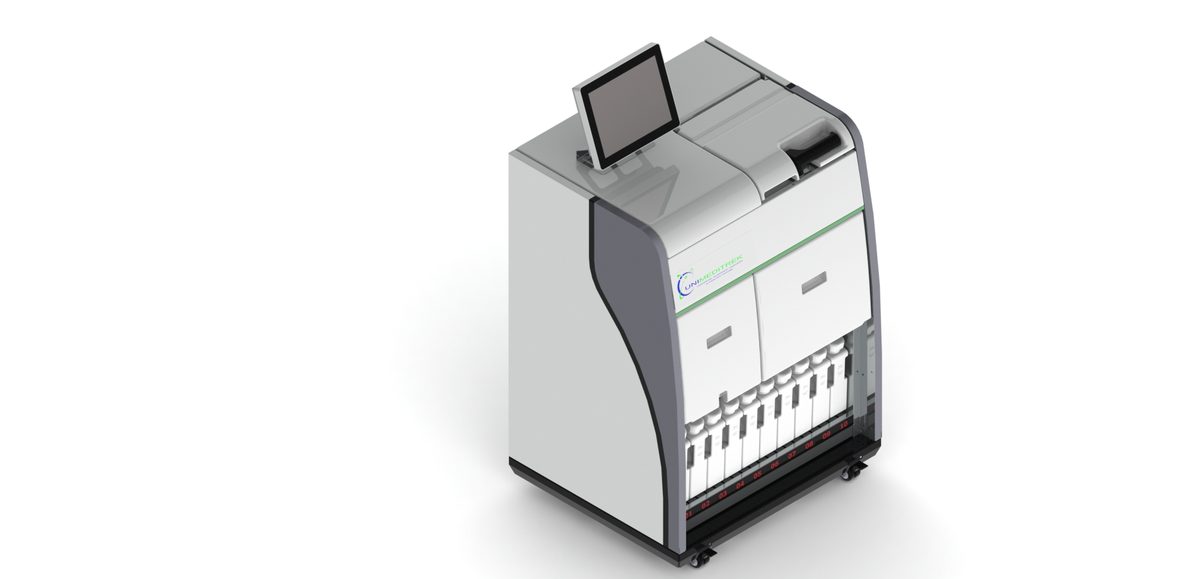
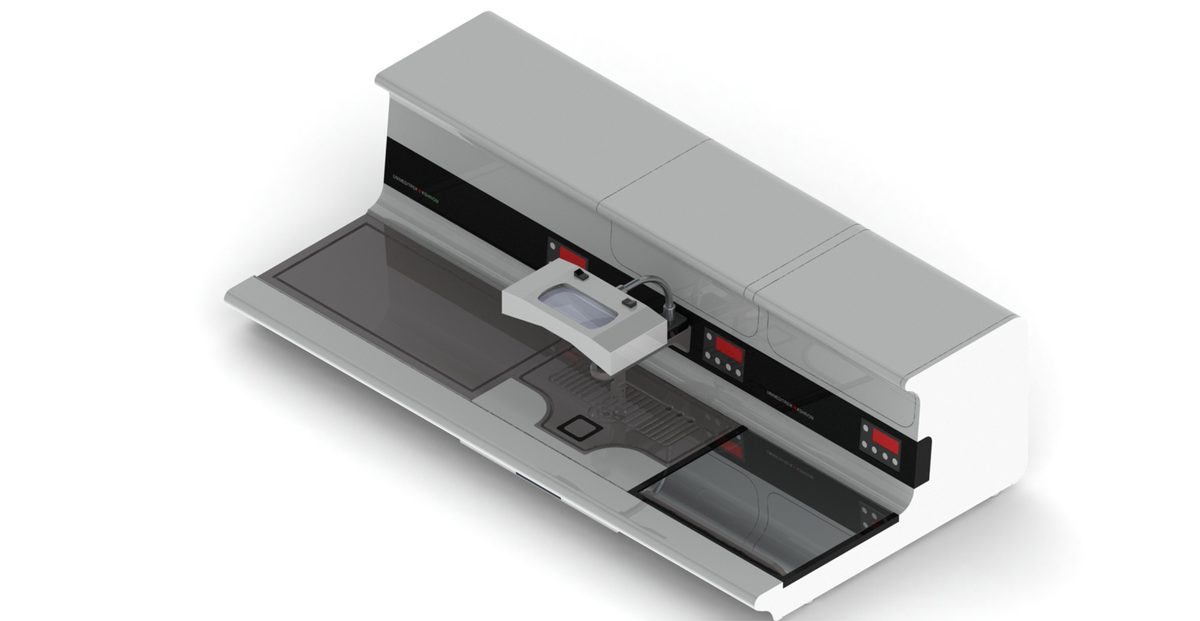
What a tissue processor does
After fixation, tissue is still saturated with water — and water is immiscible with the molten paraffin used to make blocks. A tissue processor automates the replacement of that water with paraffin by carrying cassettes of tissue through a programmed sequence of reagents: dehydrating agents, a clearing agent and molten wax. The end product is tissue fully infiltrated with paraffin, ready to be embedded into a firm block that can be cut into thin sections.
Doing this by hand is slow, hazardous and inconsistent. Automating it makes processing reproducible, frees staff and allows long schedules to run unattended overnight — which is why the tissue processor is one of the first instruments any histopathology laboratory invests in.
The science: fixation, dehydration, clearing, infiltration
Fixation comes first (usually before the processor, in neutral buffered formalin) and stabilises the tissue. Dehydration then removes water using a series of graded alcohols — typically increasing concentrations up to absolute alcohol — so that water is gradually drawn out without distorting the tissue.
Clearing follows: a clearing agent such as xylene (or a xylene substitute) is miscible with both alcohol and paraffin and replaces the alcohol, making the tissue translucent and ready to accept wax. Finally, paraffin infiltration replaces the clearing agent with molten paraffin, which permeates the tissue and, on cooling, gives it the firmness needed for sectioning. Each step must be complete before the next, which is why timing and reagent quality matter so much.
Types of tissue processor, and vacuum technology
Two broad designs are common. Carousel (tissue-transfer) processors move baskets of cassettes sequentially through open stations of reagent and wax on a timed cycle — robust, economical and easy to understand. Enclosed (fluid-transfer) processors keep the tissue in a sealed retort and pump reagents in and out around it, which improves fume containment and control.
The most useful capability across both is vacuum and pressure. Applying vacuum helps remove trapped air and pull reagents into the tissue, while pressure drives complete infiltration — particularly valuable for dense, fatty, or decalcified specimens that otherwise process poorly. A vacuum tissue processor therefore tends to give more consistent results across a varied case mix.
Programmable schedules and reagent management
A single processing schedule rarely suits every specimen. Small biopsies need short, gentle cycles; large or fatty resections need longer ones. Programmable processors let a laboratory store and repeat validated schedules — a rapid biopsy run, a routine overnight run, and extended runs — so output does not depend on who is on the bench.
Reagent management is the other major feature. Reagents degrade with use; changing them by habit either wastes money (too early) or harms quality (too late). Processors that track reagent usage and prompt rotation remove the guesswork, controlling cost and protecting processing quality at the same time, while sealed systems also reduce formalin and xylene exposure for staff.
Throughput and sizing
"How many blocks per day can it handle?" is the most common buyer question, and the honest answer is: it depends on the model, the basket/retort capacity, and the schedules you run. A processor running a single overnight schedule has a very different daily output from one running several rapid cycles through the day.
Rather than fixate on a headline number, size a processor to your actual case load and case mix, with headroom for growth, and consider whether a separate rapid pathway for small biopsies would shorten turnaround. The right approach is to share your blocks-per-day and specimen mix with a specialist who can match the model and configuration — exact capacity figures should come from the manufacturer for the specific unit, not from a generic guide.
Common problems and troubleshooting
Most processing problems show up downstream as blocks that will not section cleanly, and most trace back to a small number of causes:
- Soft, mushy or wet blocks — usually incomplete dehydration or exhausted reagents; tissue did not fully give up its water.
- Hard, brittle, over-processed tissue — often excessive time in alcohols/clearing or overheating.
- Incomplete infiltration of dense or fatty tissue — favours processors with vacuum/pressure and a schedule matched to the specimen.
- Run-to-run variability — frequently degraded reagents changed "by eye" rather than on a managed schedule.
Under-fixation is a frequent hidden culprit: tissue that enters the processor under-fixed will process poorly no matter how good the instrument. Disciplined fixation and reagent management prevent the majority of processing faults.
Maintenance and validation
A processor is a critical, single-point-of-failure instrument — when it stops, sectioning stops — so it rewards preventive care. Routine maintenance covers reagent rotation and replacement, cleaning of the retort and wax baths, checking seals, valves and filters, and verifying temperatures. For accreditation, laboratories also keep records of these activities and of installation and operational checks (often described as IQ/OQ/PQ).
An AMC or CMC contract that guarantees scheduled preventive maintenance, calibration and genuine spares turns uptime from a hope into a managed outcome — important when a single processor underpins the whole laboratory.
How to select a tissue processor
When choosing a tissue processor, work through a short checklist: your daily block load and case mix; whether you need vacuum/pressure for dense or fatty tissue; the schedules you will run (and whether you need a rapid biopsy pathway); reagent-management and fume-containment features; safety interlocks and alarms; and the service, spares and documentation behind the instrument.
Above all, match the processor to your workflow rather than to a specification sheet in isolation. The best instrument is the one sized and configured for your laboratory and backed by dependable local service. The Automatic Vacuum Tissue Processor page sets out the configuration in detail, and a specialist can recommend the right model for your volumes.
Frequently asked questions
How does an automatic tissue processor work?
It carries cassettes of fixed tissue through a programmed sequence of reagents — graded alcohols to dehydrate, a clearing agent such as xylene, and molten paraffin to infiltrate — so the water in the tissue is fully replaced by wax, producing a sectionable block.
What is a vacuum tissue processor?
A processor that applies vacuum and pressure during processing to remove trapped air and drive complete reagent and paraffin infiltration, which is especially helpful for dense, fatty or decalcified tissue.
How many blocks per day can a tissue processor handle?
It depends on the model, basket or retort capacity and the schedules run (rapid versus overnight). Capacity should be matched to your actual case load by the manufacturer rather than taken from a single figure.
Why are my blocks soft or mushy after processing?
Usually incomplete dehydration or exhausted reagents, meaning the tissue did not fully give up its water before infiltration. Reagent management and a schedule matched to the specimen usually resolve it.
Prepared and reviewed by the Unimeditrek technical team based on laboratory practice, installation and service experience. This document explains histopathology workflow, laboratory practice and equipment based on the questions we hear from hospitals, medical colleges and diagnostic laboratories — vendor-neutral where it explains the science and practical where it explains equipment.