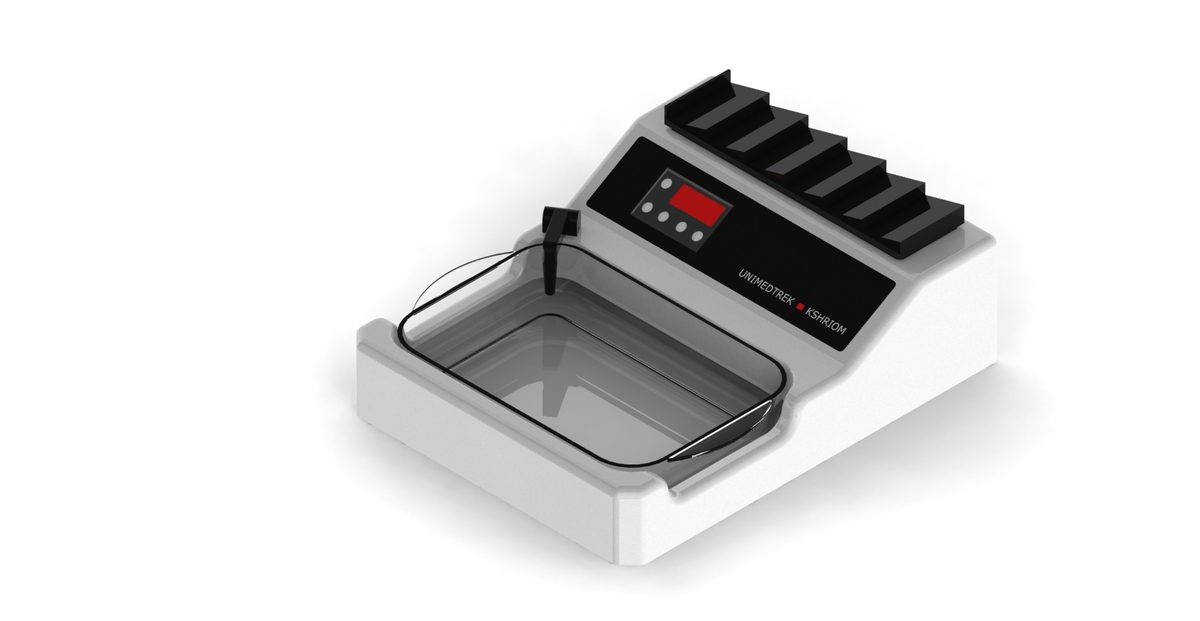
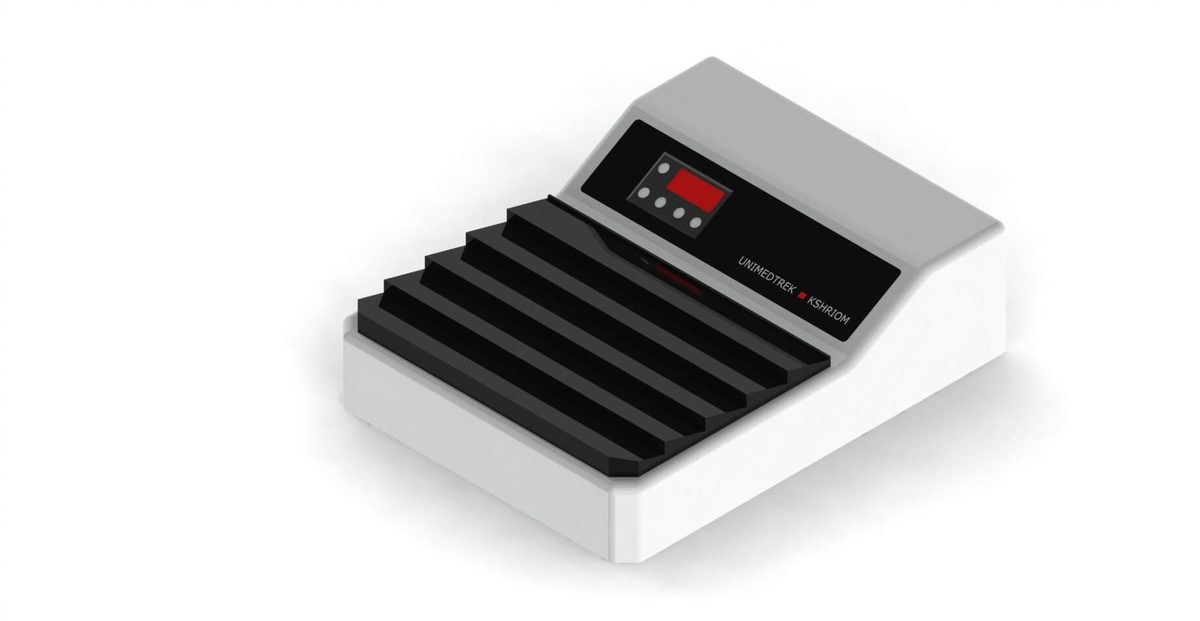
What a floatation bath does
A tissue floatation bath is a thermostatically controlled water bath sited next to the microtome. Sections are floated on its surface, where surface tension and gentle warmth relax the compression and folds introduced by cutting, leaving the section flat and smooth before it is picked up onto a glass slide. It is the bridge between microtomy and drying, and it has a direct, visible effect on how clean the final slide looks.
Why temperature is everything
The water is held at a precise temperature just below the melting point of the embedding paraffin — commonly in the region of 40–45 °C, depending on the wax. The window is narrow:
- Too hot and the section over-expands, splits or the wax begins to melt, distorting morphology.
- Too cool and folds and wrinkles will not relax out.
A bath that holds a stable, even temperature across the whole surface — without a hot spot under the element — is therefore the core requirement. Digital temperature control with good thermal uniformity is what separates a good bath from a frustrating one.
Pick-up technique
Cut a ribbon, float it shiny-side down onto the water, let it relax for a few seconds, separate the section you want, then bring the slide up underneath it at an angle so the section drapes onto the glass in the correct orientation. Clean water and a clean surface matter: debris on the water transfers onto slides. Many technologists keep the working area of the bath clear with a slip of paper or a gentle skim between sections.
Features that matter
- Accurate digital temperature control with a clear set/actual display.
- Even surface heating — no hot spot that over-expands one part of the section.
- A dark and a light area or good contrast/illumination so sections are easy to see.
- An easily cleaned, corrosion-resistant bowl and a manageable water volume that reaches temperature quickly.
- A stable, splash-free design for a tidy bench next to the microtome.
Common floatation problems
- Folds and wrinkles won't relax — water too cool, or the section left too briefly; warm slightly and allow more time.
- Over-expansion, splitting or holes — water too hot; reduce the set temperature.
- Floaters / contamination on slides — debris from a previous block on the water surface; skim and change the water regularly.
- Sections sink or won't spread — surface contamination or wrong temperature.
Folds blamed on the microtome are very often a floatation-bath issue — see the Complete Guide to Microtomes.
Water quality and maintenance
Use clean (ideally distilled or deionised) water, change it regularly to prevent cross-contamination between cases, and clean the bowl at the end of each session to remove wax film and debris. Letting the bath reach a stable temperature before the first section of the day avoids the early-morning folds that come from cutting onto under-temperature water.
Frequently asked questions
What temperature should a tissue floatation bath be set to?
Just below the melting point of the embedding paraffin — commonly around 40–45 °C depending on the wax. Too hot over-expands or splits sections; too cool leaves folds. A stable, even temperature across the surface matters as much as the exact value.
Why won’t the folds come out of my sections on the bath?
Usually the water is too cool or the section was not given time to relax. Warm the bath slightly and allow a few more seconds. Persistent folds with correct temperature can also point to microtomy or block issues.
What causes floaters or contamination on my slides?
Tissue debris from a previous block left on the water surface gets picked up onto later slides. Skim the surface between sections and change the water regularly to prevent cross-contamination.
What water should I use in a floatation bath?
Clean water, ideally distilled or deionised, changed regularly. Clean the bowl at the end of each session to remove wax film and debris, and let the bath reach a stable set temperature before cutting the first section.
Prepared and reviewed by the Unimeditrek technical team based on laboratory practice, installation and service experience. This document explains histopathology workflow, laboratory practice and equipment based on the questions we hear from hospitals, medical colleges and diagnostic laboratories — vendor-neutral where it explains the science and practical where it explains equipment.