What a slide warming table does
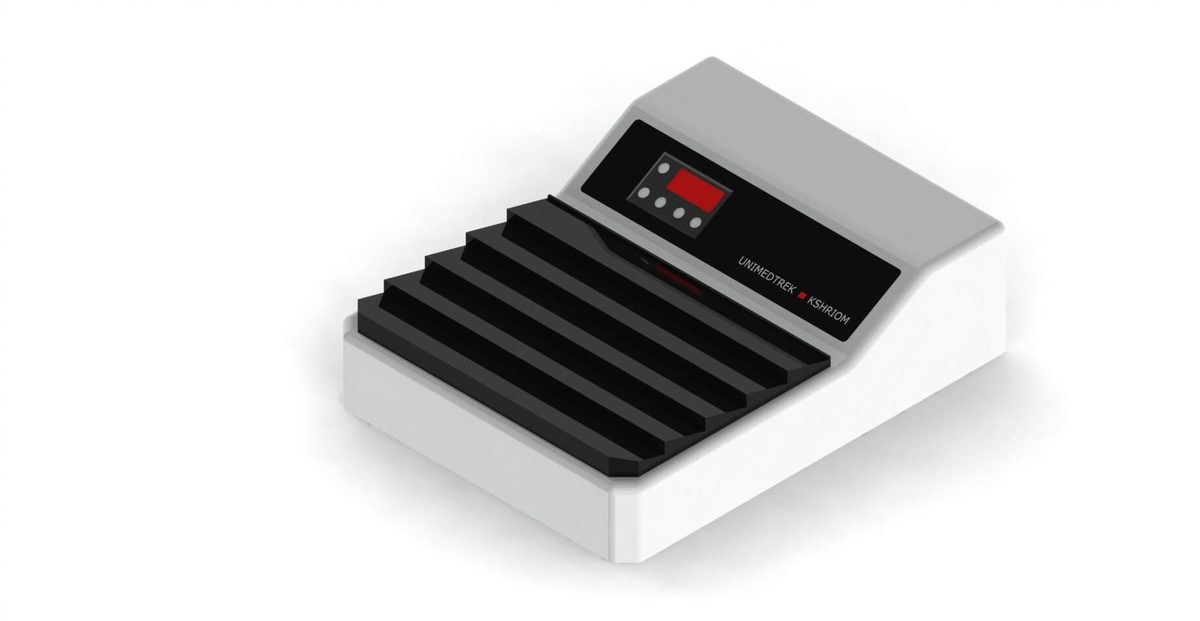
A slide warming table (or slide drying table) is a thermostatically controlled flat heated surface on which freshly picked-up slides are laid to drain residual water and adhere the section to the glass. Drying drives off the water trapped under the section and helps the tissue bond to the slide, so it stays put through dewaxing and staining. It is the last step before staining and the last chance to set the section firmly on the glass.
Why drying and adhesion matter
A section that is not properly dried and adhered will wash off or float during staining — losing the case, or worse, contaminating other slides. Proper warming also flattens any last residual creases and removes water that would otherwise cause patchy dewaxing and uneven staining. In short, good drying protects both the integrity of the section and the quality of the final stain.
Temperature and uniformity
Warming is done at a controlled temperature, typically in the region of 40–45 °C for general drying, with higher “baking” temperatures used for some applications and tissues. Two things matter more than the headline number: a uniform surface with no hot spots, and a temperature that is not excessive. Overheating bakes artefacts into the tissue, can distort morphology and affects some antigens, so controlled, even, moderate heat is the goal — not the hottest plate available.
Features that matter
- Accurate thermostatic control with a clear set/actual readout.
- Even heat distribution across the whole working surface — no hot spots.
- Adequate capacity for your slide throughput, with a flat, easily cleaned surface.
- A surface finish that holds slides steadily and is simple to wipe down.
- Reliable, repeatable temperature day after day, since this runs continuously.
Common problems
- Sections washing off during staining — under-dried or under-adhered; increase drying time or check temperature and slide quality (adhesive/charged slides help for difficult tissue).
- Drying / baking artefact — temperature too high; reduce it. Overheating distorts morphology and can affect antigenicity.
- Uneven drying — hot or cold spots on the surface; a uniform table fixes it.
- Slow drying — surface below set temperature, or table overloaded.
Where it sits in the workflow
The warming table follows the floatation bath and precedes the stainer. Together, floatation and drying are two unglamorous steps that quietly determine a large share of final slide quality — a point made in the Complete Guide to Histopathology. Many modern stainers also offer integrated drying/baking, but a dedicated warming table remains a simple, reliable workhorse.
Frequently asked questions
What temperature should a slide warming table be set to?
Typically around 40–45 °C for general drying, with higher baking temperatures used for some applications. Even more important than the exact value are a uniform surface with no hot spots and avoiding excessive heat, which can bake in artefacts and affect some antigens.
Why are my sections washing off during staining?
They were under-dried or under-adhered before staining. Increase drying time, check the table temperature and uniformity, and for difficult tissue use adhesive or charged slides so the section bonds firmly and survives the stainer.
Can overheating a slide on the warming table cause problems?
Yes. Excessive temperature bakes drying artefacts into the tissue, can distort morphology and may affect antigenicity for later immunohistochemistry. Controlled, even, moderate heat is the goal rather than the hottest setting.
Is a slide warming table still needed if my stainer has integrated drying?
Not strictly, but a dedicated warming table is a simple, reliable way to dry and adhere sections immediately after pick-up, and many labs use one even alongside a stainer with on-board drying to keep the bench flowing.
Prepared and reviewed by the Unimeditrek technical team based on laboratory practice, installation and service experience. This document explains histopathology workflow, laboratory practice and equipment based on the questions we hear from hospitals, medical colleges and diagnostic laboratories — vendor-neutral where it explains the science and practical where it explains equipment.