Home › Knowledge › Programmable Protocols for Special Stains in Histopathology
Knowledge articleProgrammable Protocols for Special Stains in Histopathology
Enhancing Precision with Modern Staining Techniques
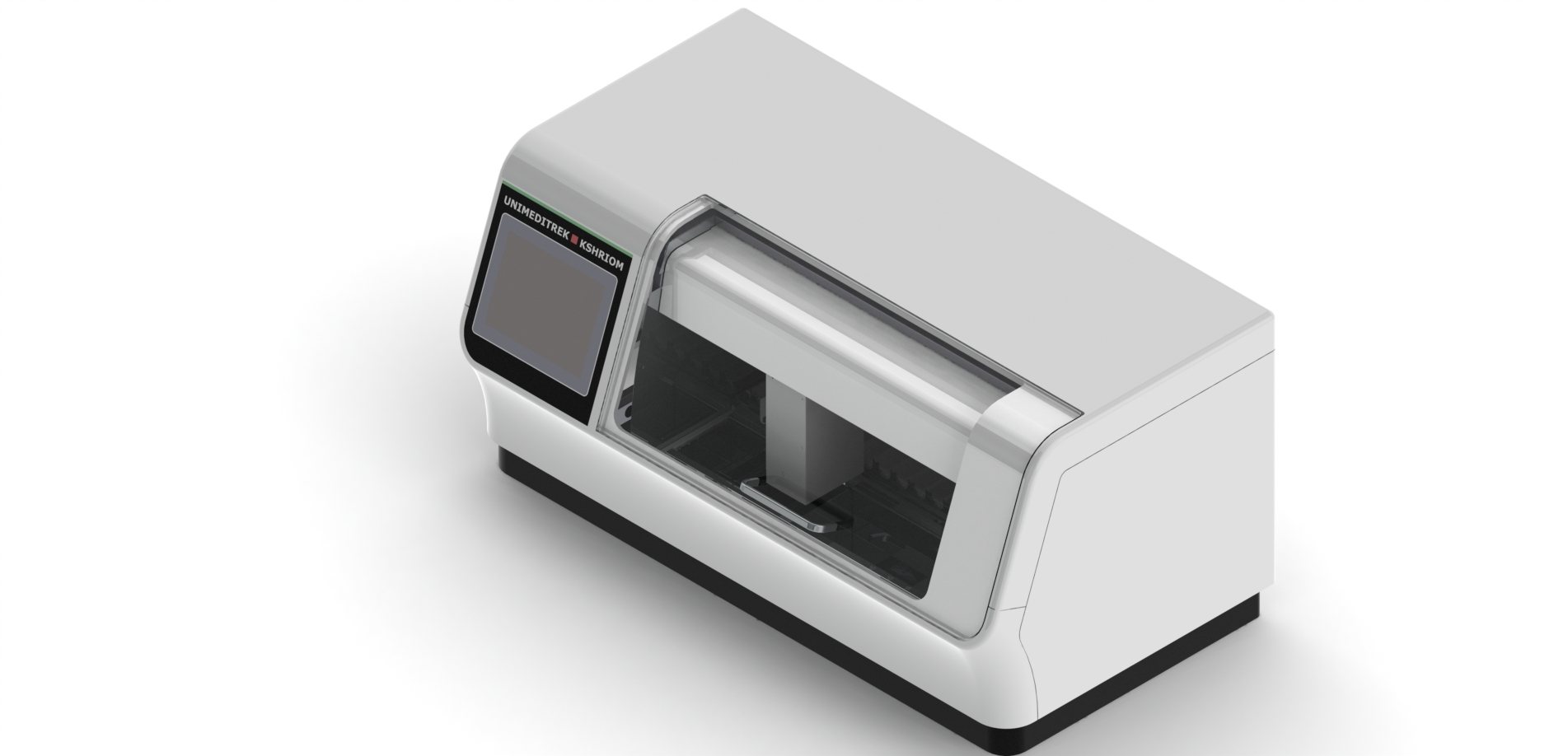 Automatic Slide Staining Machine — Unimeditrek" style="max-width:100%;border-radius:10px"/>
Introduction to Special Stains
In histopathology, special stains are indispensable tools that allow pathologists to visualize specific cellular components, differentiate between various tissue types, and identify pathological changes. Unlike routine stains, which provide a general overview of tissue morphology, special stains target specific structures or substances, such as carbohydrates, proteins, lipids, or minerals. This specificity is crucial for accurate diagnosis and treatment planning.
The evolution of staining techniques has led to the introduction of programmable protocols in modern histopathology laboratories. These protocols enable the automation of staining processes, thereby enhancing reproducibility, efficiency, and accuracy. The integration of these protocols with advanced equipment, such as the linear slide staining machine, allows for greater flexibility and control over the staining process, ensuring high-quality results.
Understanding Programmable Protocols
Programmable protocols in histopathology refer to predefined sequences of staining steps that can be customized according to the specific requirements of the tissue type or the staining method being employed. These protocols can be programmed into automated staining machines, allowing for consistent execution of complex staining procedures. The ability to program a variety of protocols is particularly beneficial in laboratories that handle diverse specimens and staining techniques.
By utilizing programmable protocols, labs can streamline their workflow, reduce the potential for human error, and ensure that each staining process adheres to established guidelines. This level of automation not only saves time but also enhances the reproducibility of results, which is essential for diagnostic accuracy. Moreover, with the rise of digital pathology, the ability to document and share staining protocols digitally further aids in standardization across different laboratories.
Benefits of Using a Linear Slide Staining Machine
The linear slide staining machine represents a significant advancement in the automation of histological staining. Its design allows for the efficient processing of multiple slides simultaneously, which is particularly advantageous in high-throughput laboratories. By incorporating programmable protocols, these machines can execute complex staining procedures with minimal manual intervention, freeing up valuable time for laboratory personnel.
Additionally, the precision offered by a linear slide staining machine ensures that reagents are applied consistently and uniformly across all slides. This uniformity is critical when performing special stains, as variations in staining intensity can lead to misinterpretation of results. Furthermore, the ability to monitor and adjust parameters such as incubation times and temperatures enhances the overall quality of the staining process, leading to more reliable diagnostic outcomes.
Implementing Programmable Protocols in Your Lab
To successfully implement programmable protocols for special stains in your laboratory, it is essential to begin with a thorough understanding of the staining methods you intend to use. Collaborate with your team to develop standardized protocols that can be programmed into your linear slide staining machine. This may involve extensive testing and validation to ensure that each protocol yields optimal results for the specific stains being used.
Training staff on the operation of the linear slide staining machine and the nuances of the programmable protocols is equally important. Ensure that all team members are familiar with the equipment and the protocols to minimize errors and maximize efficiency. Regular reviews and updates of the protocols will also help maintain the quality and relevance of your staining processes as new techniques and stains are introduced into the field.
Practical Takeaway
Incorporating programmable protocols for special stains into your histopathology lab can significantly enhance the efficiency and accuracy of staining processes. By utilizing a linear slide staining machine, you can achieve consistent results, reduce manual errors, and streamline your workflow. Regular training and protocol reviews will ensure that your lab remains at the forefront of histopathological practices, ultimately benefiting patient outcomes.
FAQs
What are special stains used for in histopathology?
Special stains are used to highlight specific cellular components, allowing for better visualization and diagnosis of tissue abnormalities.
How do programmable protocols improve staining processes?
Programmable protocols enhance consistency, reproducibility, and efficiency in staining processes, reducing human error and saving time.
What is the advantage of using a linear slide staining machine?
A linear slide staining machine allows for simultaneous processing of multiple slides with precision, improving workflow and staining quality.
Prepared and reviewed by the Unimeditrek technical team based on laboratory practice, installation and service experience. This document explains histopathology workflow, laboratory practice and equipment based on the questions we hear from hospitals, medical colleges and diagnostic laboratories — vendor-neutral where it explains the science and practical where it explains equipment.
Prepared by Unimeditrek Pvt. Ltd.. For product specifications and quotations, contact our team.