Home › Products › Case Study — Automatic Staining at a 500-Bed Hospital
Customer proofCase Study — Automatic Staining at a 500-Bed Hospital
A 500-bed multi-specialty hospital in North India was struggling with variable H&E quality and repeat slides from manual staining. This is how automation fixed it. (Details anonymised.)

The challenge
Manual staining produced batch-to-batch variation in nuclear and cytoplasmic contrast, causing repeat slides, wasted reagents and turnaround-time pressure during peak load.
The solution
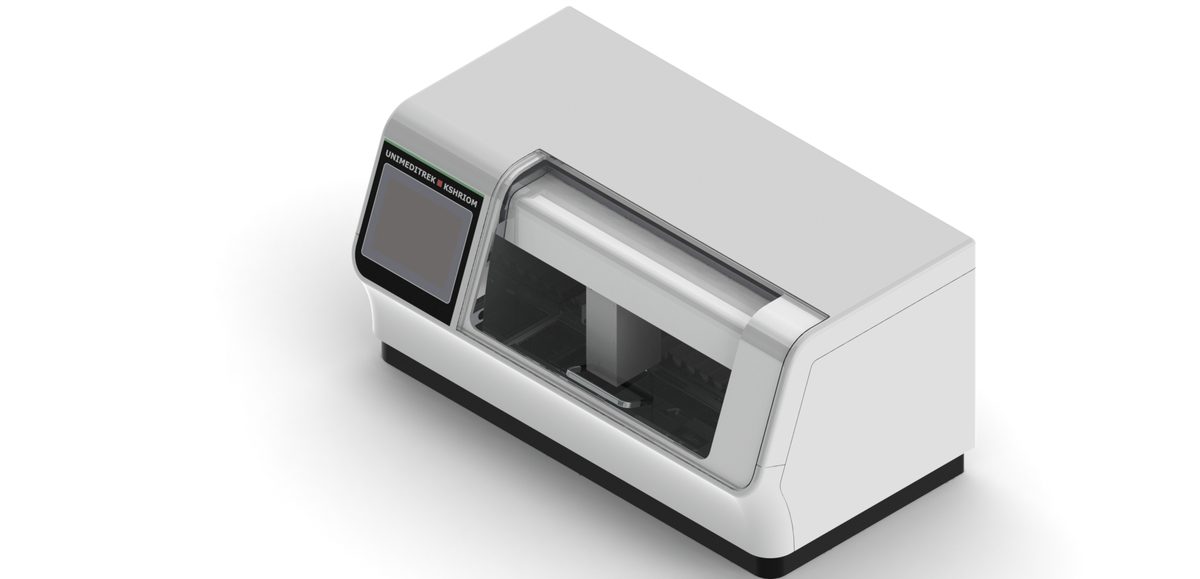
The lab installed an automatic slide staining machine with programmable protocols and reagent management, standardising dip times and sequence across shifts.
The outcome
Staining became reproducible across every batch and technician, repeat slides fell, reagent use stabilised and reporting turnaround was protected — freeing technologists for bench work.
Related equipment
Common questions
Does automatic staining really reduce repeat slides?
Yes — by fixing dip times and sequence with programmable protocols, contrast becomes reproducible across batches and operators, so fewer pale or over-stained slides go back for a re-do.
What are the benefits of using automated slide staining in histopathology labs?
Automated slide staining improves consistency and reproducibility in H&E staining, reduces human error, and increases throughput, allowing labs to process more samples efficiently. Additionally, it minimizes the risk of cross-contamination and enhances overall workflow, making it a valuable investment for any histopathology laboratory.
How does automatic staining improve the turnaround time for histopathology results?
Automatic staining significantly reduces the turnaround time for histopathology results by streamlining the staining process and minimizing manual intervention. This efficiency allows labs to process more samples in less time, leading to quicker diagnosis and treatment for patients.
What factors should be considered when selecting an automatic slide staining system for a large hospital?
When selecting an automatic slide staining system for a large hospital, consider factors such as throughput capacity, compatibility with various staining protocols, ease of use, maintenance requirements, and support services. Additionally, evaluate the system's ability to integrate with existing laboratory information systems (LIS) to streamline workflow and data management.
What maintenance is required for automatic slide staining machines in a histopathology lab?
Regular maintenance for automatic slide staining machines typically includes routine cleaning, calibration, and software updates to ensure optimal performance. It's essential to follow the manufacturer's guidelines for maintenance schedules and to keep an eye on wear-and-tear parts to prevent unexpected downtime.
What is the impact of automatic slide staining on the quality of H&E staining results?
Automatic slide staining enhances the quality of H&E staining by providing consistent reagent application and reducing human error, which leads to more reliable and reproducible results. This consistency is crucial for accurate diagnosis and can significantly improve the overall efficiency of histopathology workflows.
What is the cost-effectiveness of implementing automatic slide staining in a large hospital?
Implementing automatic slide staining can lead to significant cost savings over time by reducing labor costs, minimizing reagent waste, and improving slide quality, which decreases the need for repeat slides. While the initial investment may be higher, the long-term benefits often justify the cost, especially in high-volume settings like a 500-bed hospital.
What training is required for lab technicians to operate automatic slide staining systems?
Lab technicians typically require basic training on the specific automatic slide staining system being used, which includes understanding the software, maintenance procedures, and troubleshooting common issues. Many manufacturers, including Unimeditrek, offer comprehensive training programs to ensure that staff can efficiently operate the equipment and maintain consistent staining quality.
What types of histopathology specimens are best suited for automatic slide staining?
Automatic slide staining systems are particularly effective for a wide range of histopathology specimens, including tissue biopsies, surgical resections, and cytology samples. These systems ensure consistent staining quality across various specimen types, which is crucial for accurate diagnosis and reporting.
What are the common challenges faced during the implementation of automatic slide staining systems in large hospitals?
Common challenges include resistance to change from manual processes, the need for extensive training for staff, and integration with existing laboratory workflows. Addressing these challenges early on can facilitate smoother adoption and enhance the overall effectiveness of the automated system.
How does automatic slide staining enhance reproducibility in histopathology results?
Automatic slide staining systems ensure consistent application of reagents and precise timing, which significantly enhances the reproducibility of histopathology results. This reliability reduces variability between slides, making it easier for pathologists to trust the outcomes and make accurate diagnoses.
Get a configuration-based quote
Tell us your requirement and we’ll send a configuration-specific quotation — usually within one working day.