Home › Knowledge › Enclosed vs Rotary Tissue Processing: Throughput, Safety and Cost
Knowledge articleEnclosed vs Rotary Tissue Processing: Throughput, Safety and Cost
How the two main processor designs differ, and which suits your lab.
When people say "automatic tissue processor," they're usually talking about one of two designs — enclosed (vacuum) or rotary (carousel). Both automate the same job: dehydration, clearing, paraffin infiltration. But they go about it differently, and the difference matters more than the brochure lets on.
Enclosed / vacuum
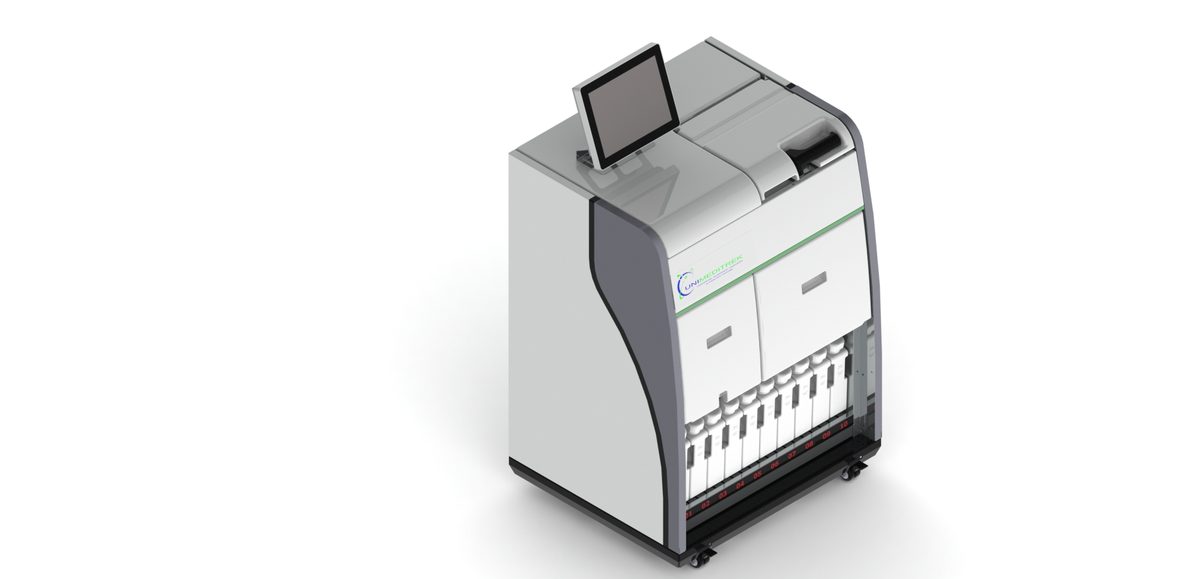
Here the tissue stays put and the reagents are pumped in and out of a sealed retort, usually with vacuum and pressure to drive infiltration. That means higher, more consistent throughput, better penetration of dense and fatty specimens, and — because it's sealed — far less fume exposure for your staff. It's the design most higher-volume labs settle on.
Rotary / carousel
The classic carousel lowers baskets into a ring of open reagent pots in sequence. It's simpler and economical for lighter, routine loads, but it's more exposed to fumes and generally slower and less consistent on tricky tissue.
So which one?
If throughput, consistency and fume safety are priorities — and for most growing labs they are — an enclosed vacuum tissue processor is the safer long-term bet. For a light, budget-conscious routine load, a carousel still earns its place. Match it honestly to your workload rather than the spec sheet.
FAQs
Is a vacuum processor better than a carousel?
It gives higher, more consistent throughput and better safety, but a carousel is more economical for routine loads.
Do both automate the same steps?
Yes — both automate dehydration, clearing and paraffin infiltration; they differ in mechanism, throughput and safety.
Prepared and reviewed by the Unimeditrek technical team based on laboratory practice, installation and service experience. This document explains histopathology workflow, laboratory practice and equipment based on the questions we hear from hospitals, medical colleges and diagnostic laboratories — vendor-neutral where it explains the science and practical where it explains equipment.
Prepared by Unimeditrek Pvt. Ltd.. For product specifications and quotations, contact our team.